

Sustainability · 2025
In this section49 topics
- Sustainability Policy4 items
- Sustainability Goals & UN SDGs3 items
- Policy Review3 items
- Business Value Chain1 item
- Stakeholder Analysis1 item
- Environmental Policy & Guidelines3 items
- Environmental Policy Review3 items
- Energy — Plan & Guidelines2 items
- Energy — Electricity Consumption1 item
- Energy — Fuel Consumption1 item
- Energy — Targets2 items
- Energy — Performance & Outcomes2 items
- Water — Plan & Guidelines2 items
- Water — Withdrawal, Discharge & Consumption1 item
- Water — Targets2 items
- Water — Performance & Outcomes2 items
- Waste — Plan & Guidelines2 items
- Waste — Generation, Disposal & Recycling1 item
- Waste — Targets2 items
- Waste — Performance & Outcomes2 items
- GHG — Plan & Guidelines2 items
- GHG — Emissions1 item
- GHG — Emissions Verification3 items
- GHG — Principles & Standards1 item
- GHG — Targets1 item
- GHG Targets — Other Targets2 items
- GHG — Performance & Outcomes2 items
- Environmental Legal Incidents1 item
- Social Policy & Guidelines5 items
- Social Policy Review3 items
- Social — Principles & Standards Practised1 item
- Human Rights Due Diligence2 items
- Employees — Plan & Guidelines3 items
- Employees — Workforce1 item
- Employees — Remuneration & Provident Fund1 item
- Employees — Training & Development1 item
- Employees — Occupational Health & Safety1 item
- Employees — Labour Relations1 item
- Employees — Employee Representation2 items
- Employees — Targets3 items
- Employees — Performance & Outcomes2 items
- Customers — Plan & Guidelines3 items
- Customers — Satisfaction Results1 item
- Customers — Targets3 items
- Customers — Performance & Outcomes2 items
- Community & Social — Plan & Guidelines3 items
- Community & Social — Targets3 items
- Community & Social — Performance & Outcomes2 items
- Law Violation Incidents1 item
Sustainability Policy
Has a Sustainability Policy
Yes
Policy Description
Hana recognizes that our long-term success depends on our ability to manage operations soundly and efficiently in an increasingly complex environment. We are committed to creating value for our stakeholders, contributing to society, and minimizing our environmental impact.
Our Policy: The Board of Directors is committed to ensuring that Hana conducts its business in accordance with Environmental, Social, and Governance (ESG) responsibilities, with respect for all stakeholders. It is the Board’s policy to operate the business with the highest professional standards, guided by the principles of good corporate governance, to achieve continuous and sustainable growth.
We recognize the importance of protecting human rights, consumer rights, and environmental management, and we are dedicated to complying with applicable laws and regulations. Additionally, we are committed to contributing to community development to ensure the long-term success of the Company, society, and all stakeholders.
Our core commitment is to create long-term shared value that benefits both the environment and our stakeholders, fostering sustainability and a positive impact across all areas of our operations.
Our Vision: To operate our business in harmony with society and the environment, creating mutual benefits for our stakeholders, the community, and our planet.
Our approach: Hana operates in a highly competitive business environment, where continuous growth and improvement of production capabilities and productivity are key priorities. The Board, management, and staff are committed to sustainable development, carefully reviewing each change to ensure it aligns with our sustainability objectives, considering its economic, social, and environmental impacts.
To drive this commitment, the Company therefore has established a Corporate Governance and Sustainability Committee, supported by sub-committee representatives from various departments. The Committee is tasked with deploying the Company’s sustainability policies, goals, action plans, and practices. Additionally, the Committee oversees the sustainability reporting process, ensuring that all content is thoroughly reviewed, discussed, and approved before being finalized. It is also responsible for monitoring progress, ensuring that sustainability initiatives are implemented, and driving continuous improvements across the organization.
Policy Document Link
https://www.hanagroup.com/File/ViewDoc/3040
Page Number in Report
1 - 2
Sustainability Goals & UN SDGs
Has Sustainability Goals
Yes
Goals Description
At Hana, we are committed to sustainable business development by growing our business while balancing economic growth, environmental care, and social well-being. We integrate the United Nations Sustainable Development Goals (SDGs) into our organizational practices to ensure that sustainability is embedded in every aspect of our operations. Our goal is to ensure that as we grow, we contribute positively to society and the environment, creating long-term value for all stakeholders.
A Responsible Business of Our Sustainable Future - Hana is committed to conducting business with the highest standards of governance, integrity, and accountability. We manage business performance by driving profitable growth while ensuring positive returns for shareholders. Innovation is at the core of our strategy as we continuously focus on enhancing operational efficiency, improving product quality, and providing exceptional customer service. Additionally, we are dedicated to making a meaningful contribution to sustainable development across our value chain, ensuring that business growth goes together with social and environmental responsibility.
A Society for Our Sustainable Future – Hana is committed to fostering a society that upholds human rights, non-discrimination, and inclusive growth. We prioritize employee development by providing opportunities for learning and growth, aiming to build a skilled and adaptable workforce. We focus on creating a healthy, safe, and inclusive workplace that supports well-being, diversity, and work-life balance. Additionally, we work to create opportunities for underprivileged communities through career development programs and support initiatives that improve skills and income prospects. By collaborating with local organizations, we aim to enhance education, public health, and social welfare, ultimately striving to create a more equitable and resilient society for the future.
A Better Environment with Our Sustainable Future – Hana is dedicated to contributing to a sustainable environment by transitioning toward a circular, low-carbon economy. We are committed to managing and reducing our greenhouse gas emissions, improving resource efficiency, promoting the sustainable use of natural resources, waste reduction, and improving ecosystems, aiming to leave a positive impact on the environment for future generations.
UN Sustainable Development Goals
| SDG Goal |
|---|
| Goal 1 No Poverty |
| Goal 2 Zero Hunger |
| Goal 3 Good Health and Well-being |
| Goal 4 Quality Education |
| Goal 5 Gender Equality |
| Goal 6 Clean Water and Sanitation |
| Goal 7 Affordable and Clean Energy |
| Goal 8 Decent Work and Economic Growth |
| Goal 9 Industry, Innovation and Infrastructure |
| Goal 10 Reduce Inequalities |
| Goal 11 Sustainable Cities and Communities |
| Goal 12 Responsible Consumption and Production |
| Goal 13 Climate Action |
| Goal 14 Life below Water |
| Goal 15 Life on Land |
| Goal 16 Peace, Justice and Strong Institutions |
| Goal 17 Partnerships for the Goals |
Policy Review
Policy Reviewed This Year
Yes
Policy Changed This Year
Yes
Review Details
-
Business Value Chain
Value Chain Description
Hana operates an integrated value chain covering sourcing, manufacturing, delivery, and after-sales services, supported by strong corporate functions. The Company conducts its business across the entire value chain, which comprises both primary and support activities, while incorporating sustainability considerations to support responsible business practices. It focuses on operational excellence, quality assurance, resource efficiency, and environmental considerations across all stages to deliver high-value products, effectively manage operational and sustainability-related risks, and maintain competitive advantage.
Primary Activities:
The Company’s core operations span from inbound logistics and procurement of materials, through advanced manufacturing and assembly processes, to outbound logistics ensuring timely product delivery. Marketing and sales activities emphasize long-term customer relationships, while after-sales services support product performance and customer satisfaction. Across these activities, the Company integrates quality control, resource efficiency, and environmentally responsible practices to enhance efficiency and mitigate operational and environmental risks.
Support Activities:
Supporting functions play a critical role in enabling business performance. Procurement ensures reliable sourcing and cost efficiency, while human resource management focuses on talent development, employee well-being, and organizational capability. Firm infrastructure, including governance, finance, and quality management systems, supports operational stability, compliance, and risk management. Technology development, including R&D, IT systems, and cybersecurity, drives innovation, productivity, and long-term competitiveness.
Value Creation:
Through the integration of primary and support activities, the Company enhances operational efficiency, maintains high product quality, and strengthens customer relationships. This integrated approach supports sustainable margin improvement, effective risk management, and long-term value creation. The Company aims to meet the expectations of stakeholders across the value chain, foster trust, and deliver positive environmental, social, and economic outcomes.
Stakeholder Analysis
Stakeholder Analysis
| Stakeholder Type | Stakeholders | Stakeholder Expectations | Response to Expectations | Communication Activities |
|---|---|---|---|---|
| Internal stakeholders | 2913 · Description: Shareholders | • Consistent dividend payment
• Steady growth
• Environment, Social and Governance | • Dividends paid each year based
on the Company’s cash flow
• Company vision for constantly
strives to grow and be competitive
• Corporate governance scorecard
• Environmental management | 2938 · Description: Visit · 2939 · Description: Press Release · 2944 · Description: Annual General Meeting (AGM) · 2949 · Other name: ESG Questionnaire · Description: Others |
| Internal stakeholders | 2921 · Description: Employees | • Appropriate compensation and welfare
• Occupational health, safety and environment
• Career development
| • Employee satisfaction survey
• Orientation, exit interview
• Training and workshop
• Complaint channels
• Operation meeting
• Risk assessment | 2941 · Description: Online Communication · 2942 · Description: Internal Meeting · 2945 · Description: Complaint Reception · 2946 · Description: Employee Engagement Survey · 2947 · Description: Satisfaction Survey · 2948 · Description: Training / Seminar |
| External stakeholders | 2923 · Description: Customers | • Quality products with on-time delivery and competitive product pricing
• Ethical and environmentally responsible
• Occupational health, safety and environment
| • Customer audits
• Customer satisfaction survey
• Customer visits
• Risk assessment | 2938 · Description: Visit · 2941 · Description: Online Communication · 2942 · Description: Internal Meeting · 2945 · Description: Complaint Reception · 2947 · Description: Satisfaction Survey |
| External stakeholders | 2899 · Description: Suppliers · 2936 · Other name: Supplier · Description: Others | • Fair and transparent supplies selection
• Payment on time
• Supply chain management
| • Supplier audit
• Supplier quality management
• Risk assessment | 2938 · Description: Visit · 2941 · Description: Online Communication · 2942 · Description: Internal Meeting · 2943 · Description: External Meeting |
| External stakeholders | 2902 · Description: Community | • Operate with no impact to the environment
• Support low-income and disadvantaged communities
• Employment opportunities for local people
• Support local business
| • Activities conducted outside the Company
• Advice/feedback from Industrial Estate
• Community visit program
• Recruitment
• Procurement | 2938 · Description: Visit · 2940 · Description: Social Event · 2943 · Description: External Meeting · 2945 · Description: Complaint Reception · 2947 · Description: Satisfaction Survey |
Environmental Policy & Guidelines
Has an Environmental Policy
Yes
Policy Description
At Hana, we recognize the critical role that environmental sustainability plays in our long-term success. As we respond to the challenges of climate change, we are committed to minimizing our environmental impact while promoting sustainable practices that benefit both our business and society. Our environmental policy is designed to ensure that all aspects of our operations reflect our responsibility to protect the environment, conserve resources, and address environmental challenges proactively.
We are committed to:
Reducing Environmental Impact: Integrating sustainability into all facets of our business, including energy use, water consumption, waste management, and emissions reduction.
Resource Efficiency: Striving to maximize the efficiency of the resources we use in every process, from sourcing raw materials to production and distribution, to minimize waste and reduce our carbon footprint.
Preventing Pollution: Implementing measures that minimize pollution, whether air, water, or soil, through advanced technologies and cleaner production methods.
Compliance with Legal Requirements: Ensuring full compliance with environmental laws, regulations, and industry standards, as well as voluntarily adopting best practices beyond the minimum legal requirements.
Circular Economy Principles: Promoting the use of renewable materials, reducing single-use products, and encouraging recycling and reuse to minimize waste generation.
Innovation for Sustainability: Continuously looking for and using new technologies and methods to reduce our environmental impact, save energy, and use fewer natural resources.
Hana's Occupational Health, Safety, and Environment (OH&S) Policy
While our environmental policy outlines our broader commitment to sustainability, Hana's Occupational Health, Safety, and Workplace Environment Policy prioritizes the health and safety of employees, business partners, contractors, visitors, and the community. This is achieved by promoting a safe working environment, ensuring good health, and protecting the environment of the communities in which we operate. We are committed to maintaining positive relationships with all stakeholders and complying with laws, international standards, and other relevant regulations.
Hana is committed to environmental protection and development, while prioritizing the safety, health, and well-being of employees and all stakeholders. The Company upholds its responsibilities toward society and labor, in parallel with its business operations and continuous improvement, as outlined below:
Provide safe and healthy working conditions to prevent work-related injuries and illnesses by addressing occupational health and safety risks and opportunities.
Eliminate hazards and minimize occupational health and safety risks to ensure a safe and healthy working environment.
Support good physical and mental health of employees, occupational health and safety consultation and encourage the participation of employees and their representatives in managing the organization's internal environment.
Protect the environment through sustainable resource use, enhance applicable technologies to reduce the negative environmental impacts of our business, prevent pollution, and minimize the use of hazardous substances in all production processes.
Fulfill and comply with applicable occupational health, safety, environmental and other specific commitments or obligations relevant to the organization's context (e.g., the Responsible Business Alliance (RBA) Code of Conduct, social responsibility, and sustainable development goals).
Enhance the continuous improvement of the environmental and occupational health and safety management systems and activities.
Communication and Engagement
We believe that clear communication is essential for fostering awareness of both our environmental and OH&S policies. To ensure that employees are aligned with our sustainability and safety objectives, we communicate these policies through various channels such as noticeboards, the Company’s intranet website, and internal guidelines. All employees are encouraged to actively engage in initiatives that promote sustainable and safe practices.
Additionally, we extend our commitment to the environment and OH&S to our external stakeholders. Our policies are made publicly available, posted at the factory entrance, and shared with business partners to ensure that our entire supply chain is aware of and aligned with our sustainability and safety goals.
Sustainable Reporting and Continuous Improvement
At Hana, we understand that our commitment to sustainability must be supported by measurable results. We actively monitor and report on our environmental performance, setting goals for greenhouse gas emissions, energy use, water management, waste reduction, and pollution control.
Our environmental management systems are subject to regular reviews, and we constantly drive for continuous improvement through employee engagement and feedback.
Climate Change Governance Roles and Responsibilities
As climate change becomes one of the most global challenges, Hana recognizes the need to prioritize sustainability and environmental responsibility within our business operations. Our governance structure for climate change is designed to ensure effective oversight, strategy development, and implementation across the organization.
Board of Directors
The Board is responsible for oversight and governance to ensure that the organization develops the necessary plans, targets, and strategies to transition toward a lower-carbon economy. The Board monitors progress and ensures alignment with the Company’s sustainability policies and framework, ensuring that action plans comply with sustainability objectives.
Corporate Governance and Sustainability Committee (CGS Committee)
The CGS Committee is responsible for setting the Company’s sustainability policies, goals, and implementation plans. The Committee monitors the performance of the sustainability strategy and ensures that efforts align with the established policy framework and goals. The CGS Committee also reports progress to the Board of Directors.
Chief Executive Officer (CEO)
The CEO integrates sustainability into the corporate vision and leads the development of strategies for climate change mitigation and adaptation. The CEO oversees governance, financial planning, and risk management, ensuring that the organization’s performance aligns with sustainable operations and objectives.
Climate Change Leader, Sub-Committee, and Climate Change Coordinator
The Climate Change Leader and the Sub-Committee are responsible for developing the environmental business plan in line with corporate objectives. They monitor progress, provide regular reports, and take necessary actions to ensure performance targets are met.
The Climate Change Coordinator supports the Climate Change Leader and Sub-Committee by implementing the climate change agenda. This includes leading specific projects or areas related to climate change, ensuring the effective execution of climate-related initiatives.
Environmental Guidelines
| Guideline |
|---|
| Electricity Management |
| Fuel Management |
| Renewable/Clean Energy Management |
| Water Management |
| Waste Management |
| Greenhouse Gas and Climate Change Management |
Environmental Policy Review
Policy Reviewed This Year
Yes
Review Details
The Company regularly reviews its environmental policies, practices, and targets to ensure alignment with operational performance, applicable requirements and relevant practices, as well as the Company’s sustainability commitments.
In 2025, the Company reviewed and revised its environmental targets, as well as the methodology for calculating environmental performance indicators, to enhance the consistency and comparability of data, and to establish appropriate and achievable long-term operational directions. Key updates are summarized as follows:
• Target Revision: The Company reviewed and revised its resource efficiency targets, including energy, water, and greenhouse gas (GHG) intensity, by considering historical performance trends, current operating conditions, and business variability. This also includes revenue-related factors and business structure considerations, such as changes in product mix and the Company’s operating models under consignment (customer-supplied materials) and turnkey (full-service manufacturing) arrangements, which may affect resource intensity metrics.
In addition, the Company takes into account advancements in energy efficiency and resource management technologies, as well as relevant government policies and regulations, together with regular comparisons against the baseline year, to ensure that targets remain appropriate, achievable, and effectively monitored over time. The target-setting and revision process is conducted under the Company’s environmental management framework, covering key operational boundaries, with periodic monitoring and review of performance.
• Change in Intensity Calculation Methodology: The Company has revised the methodology for calculating environmental intensity metrics, including energy, water, waste, and GHG intensity, by adopting a consolidated approach, whereby total resource consumption or emissions are divided by total sales revenue, replacing the previous aggregation of site-level intensity ratios.
This revised methodology is intended to improve consistency and comparability of performance reporting at the corporate level, while reducing variability arising from differences in operational scale or structure across sites (site-level variation), as well as impacts from changes in business structure and revenue mix (product mix). To ensure continuity of performance comparison, historical data have been restated in line with the revised methodology, where applicable.
• Scope of Environmental Management and Reporting: The Company implements environmental management policies and practices across all operations at the Group level. For reporting purposes, environmental performance data disclosed in this report primarily covers key manufacturing sites in Thailand, namely Hana Lamphun and Hana Ayutthaya, which contributed approximately 75% of the Group’s total revenue in 2025. These sites are considered representative of the Company’s core operations and significant environmental impacts.
• Continuous Improvement in Disclosure Scope: The Company plans to expand the scope of environmental data collection and disclosure to additional operational sites, with the aim of enhancing the completeness, consistency, and comparability of data at the Group level over the long term.
Policies & Guidelines Changed
| Change |
|---|
| Electricity Management |
| Fuel Management |
| Renewable/Clean Energy Management |
| Water Management |
| Waste Management |
| Greenhouse Gas and Climate Change Management |
Energy — Plan & Guidelines
Has an Energy Management Plan
Yes
Plan Description
The Company focuses on improving energy efficiency and reducing energy consumption across its business operations through the following key initiatives:
Energy-Efficiency Programs: Hana is committed to improving energy efficiency across its operations by continuously assessing and upgrading its machinery and equipment to reduce energy consumption. Each year, Hana’s factories implement energy conservation projects to optimize electricity usage and contribute to environmental sustainability.
For 2025, the Company continues its commitment to energy conservation with a series of energy efficiency initiatives, including:
Equipment and System Optimization - Upgrading and optimizing production machinery, air compressors, chillers, HVAC systems, vacuum pumps, and cooling towers to improve efficiency and minimize energy use.
Technology Upgrades - Replacing aging motors, fans, and pumps, as well as implementing high-efficiency LEDs and inverter-based systems, to enhance operational performance while lowering emissions.
Process and Utility Optimization - Improving system operations through VSD installations, air buffer tanks, and optimized temperature and pressure controls, as well as enhancing utility systems such as compressed air and process gas systems to reduce electricity consumption and overall energy demand.
Energy-Conscious Operations - Promoting efficient use of lighting, machines, air conditioning, and water, ensuring non-essential equipment is turned off when idle, and fostering a culture of responsible energy consumption across facilities.
Energy Conservation – Encouraging disciplined energy-saving behaviors, including switching off lighting, air conditioning, and equipment during non-operating hours, while maintaining critical systems required for production continuity.
Renewable Energy Strategy: The Company recognizes renewable energy as an important part of our efforts to promote a sustainable environment and mitigate climate change. Since 2020, we have integrated solar energy into our operations, initially installing 3 MW of solar panels on the roofs of our Lamphun and Ayutthaya factories. These early installations marked the beginning of our commitment to renewable energy, which has continued to expand over the years.
Our renewable energy infrastructure now extends to Lamphun, Ayutthaya, Headquarters, and Jiaxing facilities, covering manufacturing buildings, office spaces, car parks, and dormitories. As of 2025, this expansion has increased our total solar capacity to 11.51 MW, generating approximately 9.5 GWh/year (~25.7 MTHB/year cost savings across sites), reflecting continued progress in our renewable energy commitment.
Looking forward, Hana will continue to expand renewable energy deployment through additional projects in 2026 and beyond. The Company remains committed to exploring and implementing innovative solutions that support its long-term environmental goals and contribute to a sustainable, low-carbon future.
Energy — Electricity Consumption
Electricity Consumption
| Metric | Current Year | Previous Year | Two Years Ago |
|---|---|---|---|
| Total electricity consumption within the organization (Kilowatt-Hours) | 128,415,957.89 | 128,367,146.9 | 133,489,537.94 |
| Electricity purchased for consumption from non-renewable energy sources (Kilowatt-Hours) | 118,914,880.6 | 121,402,465.4 | 128,902,049 |
| Electricity purchased or generated for consumption from renewable energy sources (Kilowatt-Hours) | 9,501,077.29 | 6,964,681.5 | 4,587,488.94 |
Energy — Fuel Consumption
Fuel Consumption
| Metric | Current Year | Previous Year | Two Years Ago |
|---|---|---|---|
| Crude oil (Barrels) | 0 | 0 | 0 |
| Coal (Metric tonnes) | 0 | 0 | 0 |
| Jet fuel (Litres) | 0 | 0 | 0 |
| Diesel (Litres) | 46,672.33 | 50,419.26 | 51,531.49 |
| Gasoline (Litres) | 10,603.43 | 10,728.11 | 10,696.11 |
| Fuel oil (Litres) | 0 | 0 | 0 |
| Natural gas (Standard cubic feet) | 0 | 0 | 0 |
| LPG (Kilograms) | 6,650.77 | 7,713 | 6,546 |
| Steam (Metric tonnes) | 0 | 0 | 0 |
Energy — Targets
Has Set Targets
Yes
Targets
| Target | Base Year | Target Year | Target Change (%) | Unit |
|---|---|---|---|---|
| Reduction of electricity purchased for consumption | 2,020 | 2,030 | 30 | Kilowatt-hour |
Energy — Performance & Outcomes
Has Performance Results
Yes
Performance Description
The Company monitors energy consumption as key performance indicators under its energy management framework, with a focus on improving energy efficiency, optimizing production processes, and reducing reliance on grid electricity.
Energy data covers operations in Thailand (Lamphun and Ayutthaya), which represent the Company’s primary manufacturing base.
2025 Key Highlights:
Total energy consumption: 128,415,958 kWh, representing an 11% reduction from the 2020 base year of 143,862,560 kWh. This reflects ongoing efforts to optimize production processes, improve equipment efficiency, and implement energy conservation initiatives across the Company’s primary manufacturing sites in Lamphun and Ayutthaya.
Energy intensity: 8,376 kWh per million THB of sales, an 11% reduction from the base year. While total intensity decreased over the long term, energy intensity increased slightly compared to 2024 due to lower sales revenue and changes in product mix, highlighting the sensitivity of intensity-based metrics to operational and business performance.
Target achievement: The Company did not meet the 2025 annual energy intensity reduction target of 20%, primarily due to lower production volumes and operational factors affecting economies of scale, as well as changes in revenue structure and product mix, which impacted energy intensity performance. Despite this, energy efficiency initiatives continued to be implemented across all sites.
Efficiency and renewable energy: Implementation of process optimization, preventive maintenance, and equipment upgrades, along with solar rooftop installations generating approximately 9.5 GWh, contributed to lower grid electricity use and supported long-term energy reduction objectives.
Ongoing commitment: Hana remains committed to enhancing energy performance through continuous process improvements, adoption of high-efficiency technologies, and employee engagement programs, ensuring alignment with sustainability goals and relevant SDG targets.
Energy Consumption and Intensity Performance (2020–2025)
Year | Total Energy Consumption (kWh) | Energy Intensity (kWh / Million THB) | Performance vs Base Year | Yearly Target Reduction (%) |
2020 (Base Year) | 143,862,560 | 9,387 | - | - |
2021 | 150,278,286 | 8,082 | -14% | -5% |
2022 | 155,855,604 | 7,668 | -18% | -10% |
2023 | 133,489,538 | 6,739 | -28% | -14% |
2024 | 128,367,147 | 7,023 | -25% | -18% |
2025 | 128,415,958 | 8,376 | -11% | -20% |
Note: In 2025, the Company revised its methodology for calculating energy intensity, which is defined as total electricity consumption divided by total sales revenue. The Company also restated historical data for prior years (including the base year) to ensure consistency with the updated methodology and to enable appropriate comparison of performance.
Key Drivers of Performance
Positive Drivers
Energy efficiency improvement initiatives
Process optimization and preventive maintenance
Increased use of renewable energy (solar rooftop installations)
Challenges
Dependence on grid electricity
Variability in production volume and product complexity
Revenue fluctuations affecting intensity metrics
Energy Management and SDGs Alignment:
Hana’s energy management focuses on improving energy efficiency and increasing the share of renewable energy to support sustainable operations and reduce environmental impact. These initiatives contribute to the following SDGs:
Primary SDG:
SDG 7: Affordable and Clean Energy
The Company enhances energy efficiency and promotes the use of renewable energy to support a transition toward cleaner energy systems.
Supporting SDGs:
SDG 13: Climate Action
Reduced energy consumption and cleaner energy sources contribute to lowering overall greenhouse gas emissions.
SDG 12: Responsible Consumption and Production
Efficient energy use supports sustainable production processes and minimizes resource waste.
Water — Plan & Guidelines
Has a Water Management Plan
Yes
Plan Description
Water Management Approach: The Company has established a comprehensive water management framework covering risk assessment, operational control, efficiency improvement, and compliance. Water consumption and related risks are regularly monitored across all manufacturing sites to ensure sustainable use of water resources and alignment with regulatory requirements.
Water Risk Assessment: The Company assesses water-related risks using the WRI Aqueduct Water Risk Atlas. Based on this assessment, four out of six manufacturing sites (approximately 67%): Lamphun, Ayutthaya, Jiaxing, and South Korea, are located in areas classified as “High” to “Extremely High” baseline water stress. Despite this classification, verification with local authorities confirms that no current operational disruption due to water scarcity has been identified at these locations, based on verification with local authorities. Water withdrawals are maintained within permitted limits and do not materially impact local water availability. The Company continues to monitor water risk conditions and regulatory developments to proactively manage potential future impacts.
Stakeholder Engagement and Water Collaboration: The Company engages with relevant stakeholders, including local authorities and regulatory bodies, to monitor water availability, manage water withdrawal and wastewater discharge, and ensure compliance with applicable regulations. Ongoing coordination is maintained with the industrial estate authority on water usage reporting and wastewater quality monitoring. Based on stakeholder feedback, the Company’s operations do not have a material impact on community water access.
The Company complies with all applicable regulatory requirements related to water management and continues to evaluate opportunities to further strengthen its water stewardship approach, including enhancing water efficiency and improving water management practices across its operations. The Company also explores opportunities for collaborative water management initiatives with relevant stakeholders where appropriate.
Water Quality Management: The Company maintains strict control over water quality and wastewater discharge through:
Continuous monitoring of water consumption, wastewater volume, water balance, and intensity
Daily monitoring of wastewater treatment systems
Monthly verification of effluent quality
All discharged wastewater consistently meets or exceeds regulatory requirements, reflecting effective treatment processes and pollution prevention practices.
Water Efficiency and Resource Management (3Rs Strategy): The Company implements a comprehensive water management plan supported by monitoring systems, operational controls, and continuous improvement initiatives to enhance water efficiency and reduce water consumption across its operations. The Company applies the principles of Reduce, Reuse, and Recycle (3R) to minimize environmental impact and promote sustainable water use. The Company prioritizes water efficiency at source, followed by reuse and recycling to maximize resource efficiency and minimize environmental impact.
Key initiatives include:
Reduce
Optimization of machine water flow and system pressure to appropriate operating levels
Installation of overflow control systems to return excess water to the process loop instead of discharge
Rainwater harvesting during the rainy season for use as supplementary feedwater
Cooling tower improvements, including enhanced control of conductivity, pH, and cycle times, and reduced chemical usage
Chiller system upgrades to improve efficiency and reduce water consumption
Installation of a Reverse Osmosis (RO) concentrate recovery system, enabling reuse of up to 200 cubic meters per day
Water balance analysis to identify losses and opportunities for reduction, along with leakage detection and corrective actions
Installation and use of high-efficiency water-saving equipment to further minimize water consumption and wastewater discharge
Reuse
Reuse of RO (Reverse Osmosis) and DI (Deionized) reject water within production processes
Reuse of UF reject water for cooling tower supply
Integration of treated wastewater back into operations where feasible
Rainwater harvesting for landscaping and other non-process uses
Recirculation of discharge water from production and utility systems for secondary uses, where water quality is suitable
Reuse of treated wastewater for utility systems such as cooling towers and general cleaning purposes
Storage and redistribution systems to support reuse of recovered water within the facility
Recycle
Advanced wastewater treatment using Reverse Osmosis (RO) and Ultrafiltration (UF) systems to improve water quality
Recycling of treated wastewater for use in cooling towers, scrubber systems, utilities, and sanitary applications (e.g., restroom flushing)
Re-treatment and reuse of RO concentrate (brine) within operational processes
Reduction in reliance on external water supply through internal water recycling systems
Enhancement of EDI supply through integration with recycled water from RO systems
Recycling of wastewater from production processes (e.g., Saw Die) for reuse in cooling tower systems
Reuse of treated cold and warm water from utility and cleaning processes as makeup water in cooling systems
Financial Quantification of Water-Related Risks: The Company monitors and manages water-related risks across its operations, including water sourcing, treatment, and contingency measures at key manufacturing sites. In 2025, total costs associated with water-related risks amounted to approximately THB 26.9 million, primarily related to water procurement, treatment systems, and risk mitigation measures implemented across the Company’s facilities. In addition, the Company invested approximately THB 4.8 million in research and development (R&D) and process improvement initiatives to mitigate water-related risks. These costs and investments are integrated into operational planning and capital investment decision-making. These initiatives include enhancements in water recycling systems, wastewater treatment technologies, and efficiency improvement projects, such as the integration of recycled water into the Reverse Osmosis (RO) system to enhance EDI supply. These investments support the Company’s long-term resilience to water-related risks, particularly in areas potentially exposed to water stress. The Company continues to evaluate opportunities to further reduce risk exposure, improve resource efficiency, and strengthen water stewardship across all operations. Looking ahead, the Company aims to further enhance water efficiency and resilience by expanding water recycling capacity, improving water use intensity, strengthening risk mitigation measures, and increasing water recycling and reuse across key operations by 2030 to reduce reliance on external water sources.
Water — Withdrawal, Discharge & Consumption
Water Withdrawal, Discharge & Consumption
| Metric | Current Year | Previous Year | Two Years Ago |
|---|---|---|---|
| Total water withdrawal (Cubic meters) | 964,631 | 981,733 | 1,102,566 |
| Total water withdrawal by third-party water (Cubic meters) | 964,631 | 981,733 | 1,102,566 |
| Total water withdrawal by surface water (Cubic meters) | 0 | 0 | 0 |
| Total water withdrawal by groundwater (Cubic meters) | 0 | 0 | 0 |
| Total water withdrawal by seawater (Cubic meters) | 0 | 0 | 0 |
| Total water withdrawal by produced water (Cubic meters) | 0 | 0 | 0 |
| Percentage of wastewater treated before discharge (%) | 80 | 80 | 80 |
| Total water discharge (Cubic meters) | 771,704.8 | 785,386.4 | 882,052.8 |
| Total water discharge to third-party water (Cubic meters) | 771,704.8 | 785,386.4 | 882,052.8 |
| Total water discharge to surface water (Cubic meters) | 0 | 0 | 0 |
| Total water discharge to groundwater (Cubic meters) | 0 | 0 | 0 |
| Total water discharge to seawater (Cubic meters) | 0 | 0 | 0 |
| Total water consumption (Cubic meters) | 192,926.2 | 196,346.6 | 220,513.2 |
| Recycled water (Cubic meters) | 421,764.2 | 452,613 | 447,929 |
Water — Targets
Has Set Targets
Yes
Targets
| Target | Base Year | Target Year | Target Change (%) | Unit |
|---|---|---|---|---|
| Reduction of water consumption | 2,020 | 2,030 | 40 | Cubic meters |
Water — Performance & Outcomes
Has Performance Results
Yes
Performance Description
The Company continuously monitors and manages water consumption to enhance resource efficiency, reduce environmental impact, and support sustainable operations. Water data disclosed in this report covers operations in Thailand (Hana Lamphun and Hana Ayutthaya), which constitute the Company’s primary manufacturing base.
2025 Key Highlights:
Total water consumption: 964,939 cubic meters, representing a 25% reduction from the 2020 base year of 1,283,914 cubic meters. This reflects ongoing efforts to optimize production processes, improve system efficiency, and implement water conservation and recycling initiatives across the Company’s primary manufacturing sites in Lamphun and Ayutthaya.
Water intensity: 62.94 cubic meters per million THB of sales, a 25% reduction from the base year. While total intensity decreased over the long term, intensity increased slightly compared to 2024 due to lower sales revenue and operational variability, reflecting the sensitivity of intensity metrics to fluctuations in revenue and operational conditions.
Target achievement: The Company exceeded the 2025 annual reduction target of 22%, driven by process optimization, water recycling projects, and effective employee engagement programs that promoted awareness and responsible water usage.
Efficiency and reuse: Continued implementation of water reuse, recovery, and system optimization initiatives contributed to improved resource efficiency, supporting the Company’s long-term water reduction objectives.
Ongoing commitment: Hana remains focused on advancing water management performance through continuous process improvements, enhanced monitoring, employee awareness campaigns, and technology upgrades, ensuring alignment with sustainability goals and relevant SDG targets.
Number of incidents of non-compliance with water quality and quantity permits, standards, and regulations: none (0 cases)
Water Consumption and Intensity Performance (2020–2025)
Year | Total Water Consumption (m3) | Water Intensity (m3 / Million THB) | Performance vs Base Year | Yearly Target Reduction (%) |
2020 (Base Year) | 1,283,914 | 83.77 | - | - |
2021 | 1,349,247 | 72.56 | -13% | -5% |
2022 | 1,403,425 | 69.05 | -18% | -10% |
2023 | 1,102,566 | 55.66 | -34% | -14% |
2024 | 981,733 | 53.71 | -36% | -18% |
2025 | 964,939 | 62.94 | -25% | -22% |
Note: In 2025, the Company revised its methodology for calculating water intensity, which is defined as total water consumption divided by total sales revenue. The Company also restated historical data for prior years (including the base year) to ensure consistency with the updated methodology and to enable appropriate comparison of performance.
Key Drivers of Performance
Positive Drivers
Water efficiency improvement initiatives
Process optimization and water recycling systems
Increased awareness of water conservation
Challenges
Variability in production volume and product mix
Dependence on operational water demand
Revenue fluctuations affecting intensity metrics
Water Management and SDG Alignment
Hana’s water management focuses on improving water efficiency, promoting water reuse and recycling, and minimizing environmental impact through sustainable water use practices. The Company adopts a 3R approach (Reduce, Reuse, Recycle) to optimize water consumption and enhance resource efficiency. In addition, wastewater treatment and quality control measures are implemented to ensure compliance with regulatory requirements and prevent environmental contamination. These initiatives contribute to the following SDGs
Primary SDG:
SDG 6: Clean Water and Sanitation
The Company improves water efficiency through reduction measures, promotes water reuse and recycling, and ensures responsible water usage across its operations. Wastewater is properly treated and monitored to meet applicable environmental standards before discharge.
Supporting SDGs:
SDG 12: Responsible Consumption and Production
Water conservation and the 3R approach support efficient resource utilization and sustainable production processes.
SDG 9: Industry, Innovation and Infrastructure
The adoption of water-saving technologies and wastewater treatment systems enhances operational efficiency and supports sustainable industrial practices.
SDG 13: Climate Action
Efficient water management contributes indirectly to climate resilience and environmental sustainability.
Waste — Plan & Guidelines
Has a Waste Management Plan
Yes
Plan Description
The Company is committed to sustainable waste management for resource-efficient consumption both in the production process and the supporting departments, by promoting awareness among those involved both inside and outside organization as well as the campaign to raise awareness among employees to effectively reduce waste and promote better waste management.
Waste Management Approach – The Company maintains a comprehensive waste inventory, waste profile, and waste flow diagram, including the separation waste by implementing a waste management system based on the 3Rs principle (Reduce, Reuse, Recycle), which serves as a guideline for managing unused materials in the factory, aimed at reducing waste, creating value-added opportunities, and maximizing resource efficiency.
Operation Process Improvement – Hana is committed to finding ways to improve production processes in order to reduce waste and by-products, by optimizing resource use and minimizing waste generation at the source.
Employee Awareness – The Company promotes waste reduction and better waste management practices among employees through awareness campaigns, emphasizing the importance of reducing waste at the source.
Hazardous Waste Control – Hana focuses on minimizing hazardous waste by improving production processes and replacing harmful materials with environmentally friendly alternatives whenever possible. The Company also separates hazardous substances and ensures their safe disposal through licensed companies authorized by the Ministry of Industry.
Landfilled Waste Reduction – Hana has implemented landfill waste management across its facilities. Waste disposal projects have been introduced for production waste, such as carrier tapes and molding compounds, which were previously sent to landfills in Saraburi. These materials are now processed using the combustion method, converting them into Refuse Derived Fuel (RDF). This process not only generates energy but also significantly reduces the amount of waste sent to landfills. The combustion gases are fully eliminated, and the resulting ash is repurposed as raw material for cement production, supporting a more sustainable approach to waste management.
Air Pollution Control – The Company has managed to monitor and control the emission of air pollution in the production process and throughout the organization to minimize impact on society and environment through the air pollution control system i.e., the high efficiency wet scrubber technology method that can eliminate more than 99% of airborne particulate matter. The air emission monitoring has been conducted regularly to measure pollutant levels in the surrounding and outdoor air and compare it to clean air standards to effectively and timely improve air quality, protect public health, and ensure compliance with regulations and the customers’ standard requirement.
Water Pollution Control – Hana applies the 3Rs strategy to water management: Reduce, Reuse, Recycle, by minimizing water consumption and discharging minimal wastewater. The Company’s wastewater treatment system efficiently removes chemicals and contaminants, ensuring that the quality of the effluent is in compliance with regulatory standards and customer requirements.
This also includes detecting and repairing any water leakage channels that could lead to water wastage, helping to conserve water and reduce pollution. Regular monitoring ensures that the treated water meets discharge standards, preventing water pollution and safeguarding local ecosystems.
Environmental Monitoring – The Company regularly monitors air, water, and soil pollution levels to ensure the safe disposal and management of hazardous waste, with a focus on minimizing harmful emissions and the contamination of natural resources.
Long-Term Goals and Continuous Improvement – Hana’s waste and pollution management plan is an ongoing process of continuous improvement, ensuring that the organization’s waste and pollution management practices are environmentally responsible and align with sustainability targets.
Waste — Generation, Disposal & Recycling
Waste Generation, Disposal & Recycling
| Metric | Current Year | Previous Year | Two Years Ago |
|---|---|---|---|
| Total waste generated (Kilograms) | 1,331,448.82 | 1,411,528.96 | 1,679,394.9 |
| Non-hazardous waste (Kilograms) | 1,138,894.85 | 1,183,460.08 | 1,409,452.4 |
| Non-hazardous waste - Landfilling (Kilograms) | 159,850 | 157,150 | 153,230 |
| Non-hazardous waste - Incineration (with energy recovery) (Kilograms) | 164,800 | 236,922 | 301,648 |
| Non-hazardous waste - Incineration (without energy recovery) (Kilograms) | 0 | 0 | 0 |
| Non-hazardous waste - Other disposal operations (Kilograms) | 814,244.85 | 789,388.08 | 954,574.4 |
| Hazardous waste (Kilograms) | 192,553.97 | 228,068.88 | 269,942.5 |
| Hazardous waste - Landfilling (Kilograms) | 11,748.17 | 15,213 | 19,226 |
| Hazardous waste - Incineration (with energy recovery) (Kilograms) | 17,760 | 21,250 | 54,520 |
| Hazardous waste - Incineration (without energy recovery) (Kilograms) | 5,659.5 | 5,147 | 3,827 |
| Hazardous waste - Other disposal operations (Kilograms) | 157,386.3 | 186,458.88 | 192,369.5 |
| Total reused/recycled waste (Kilograms) | 971,631.15 | 975,846.96 | 1,146,943.9 |
| Reused/Recycled non-hazardous waste (Kilograms) | 814,244.85 | 789,388.08 | 954,574.4 |
| Reused non-hazardous waste (Kilograms) | 62,894.7 | 77,954.21 | 65,853.59 |
| Recycled non-hazardous waste (Kilograms) | 751,350.15 | 711,433.87 | 888,720.81 |
| Reused/Recycled hazardous waste (Kilograms) | 157,386.3 | 186,458.88 | 192,369.5 |
| Reused hazardous waste (Kilograms) | 12,141.2 | 13,197.2 | 12,738 |
| Recycled hazardous waste (Kilograms) | 145,245.1 | 173,261.68 | 179,631.5 |
Waste — Targets
Has Set Targets
Yes
Targets
| Waste Type | Disposal Approach | Target | Base Year | Target Year | Target Change (%) | Unit |
|---|---|---|---|---|---|---|
| Non-hazardous waste | 2758 · Description: Reuse · 2759 · Description: Recycle · 2760 · Description: Landfilling · 2761 · Description: Incineration with energy recovery · 2762 · Description: Incineration without energy recovery | Reduce waste volume | 2,020 | 2,030 | 40 | Kilograms |
| Hazardous waste | 2758 · Description: Reuse · 2759 · Description: Recycle · 2760 · Description: Landfilling · 2761 · Description: Incineration with energy recovery · 2762 · Description: Incineration without energy recovery | Reduce waste volume | 2,020 | 2,030 | 40 | Kilograms |
Waste — Performance & Outcomes
Has Performance Results
Yes
Performance Description
Waste Reduction and Resource Efficiency:
The Company continuously monitors and manages waste generation and disposal to enhance resource efficiency and minimize environmental impact across its operations.
Waste generation data disclosed covers operations in Thailand (Hana Lamphun and Hana Ayutthaya), which represent the Company’s major manufacturing base.
2025 Key Highlights:
Total waste generation: 1,331,450 kg, representing a 34% reduction from the 2020 base year of 2,021,750 kg. This reflects ongoing efforts to optimize production processes, minimize material losses, and implement effective waste reduction initiatives across the Company’s primary manufacturing sites in Lamphun and Ayutthaya.
Waste intensity: 86.85 kg per million THB of sales, a 34% reduction from the base year. While total intensity decreased over the long term, intensity increased slightly compared to 2024 due to lower sales revenue and operational variability, highlighting the sensitivity of intensity metrics to business performance.
Target achievement: The Company exceeded the 2025 annual target reduction of 22%, driven by a combination of process optimization, waste minimization projects, and effective employee engagement programs that promoted awareness and responsible waste practices.
Circularity and recovery: Continued emphasis on reuse, recycling, and diversion from landfills contributed to improved resource efficiency, supporting the Company’s long-term waste reduction objectives.
Ongoing commitment: Hana remains focused on advancing waste management performance through continuous process improvement, employee awareness initiatives, and collaboration with certified waste management partners, ensuring alignment with sustainability goals and SDG targets.
Waste Generation and Intensity Performance (2020–2025)
Year | Total Waste (kg) | Waste Intensity (kg / Million THB) | Performance vs Base Year | Yearly Target |
2020 (Base year) | 2,021,750 | 131.91 | - | - |
2021 | 2,394,551 | 128.77 | -2% | -5% |
2022 | 2,205,924 | 108.53 | -18% | -10% |
2023 | 1,679,392 | 84.78 | -36% | -14% |
2024 | 1,411,525 | 77.22 | -41% | -18% |
2025 | 1,331,450 | 86.85 | -34% | -22% |
Note: In 2025, the Company revised its methodology for calculating waste intensity, which is defined as total waste generated divided by total sales revenue. The Company also restated historical data for prior years (including the base year) to ensure consistency with the updated methodology and to enable appropriate comparison of performance.
Waste to Landfill Reduction:
The Company prioritizes minimizing waste sent to landfill through waste segregation, recycling, and recovery initiatives.
In 2025:
Total landfill waste: 11.70 tons
Reduction from 2020 base year: 68%
Target achievement: Exceeded (target: 50%)
This strong performance reflects continuous improvement in waste diversion and circular resource management practices.
Waste Recovery and Circularity:
The Company actively promotes circular economy practices through waste recovery and recycling.
Waste recovery rate (2025): 81% of total waste
Target: 80%
Performance: Exceeded
This achievement reflects effective waste segregation, recycling systems, and collaboration with certified waste management partners.
Pollution Control and Compliance:
The Company maintains strict environmental controls to prevent pollution and ensure compliance with applicable regulations.
Air Emissions: Air emission quality is continuously monitored and controlled to ensure compliance with regulatory standards.
Performance: No exceedance of emission limits recorded during the reporting period, based on regular monitoring in accordance with applicable regulatory requirements across all manufacturing sites
Effluent Wastewater: Wastewater treatment systems are operated and monitored to ensure discharge quality meets regulatory requirements.
Performance: No exceedance of wastewater discharge standards at all sites
Spill Prevention: The Company implements preventive measures and operational controls to minimize environmental incidents.
Performance: Zero incidents of oil and chemical spills recorded in 2025
Key Performance Drivers
Positive Drivers
Implementation of waste reduction and process optimization initiatives
Improved material utilization and yield efficiency
Increased recycling and waste segregation practices
Challenges
Variability in production volume and product mix
Changes in operational processes and material usage
Revenue fluctuations affecting intensity metrics
Waste Management and SDG Alignment
Hana’s waste management focuses on minimizing waste generation, reducing landfill disposal, and promoting recycling and resource efficiency across its operations. Through waste segregation, recycling programs, and landfill diversion initiatives, the Company enhances environmental performance and supports sustainable production. These initiatives contribute to the following SDGs:
Primary SDG:
SDG 12: Responsible Consumption and Production
The Company reduces waste generation and landfill disposal through process optimization, waste segregation, recycling programs, and landfill diversion initiatives, supporting efficient resource utilization and sustainable production practices.
Supporting SDG:
SDG 13: Climate Action
Waste reduction and recycling initiatives contribute to lowering greenhouse gas emissions associated with waste treatment and disposal.
GHG — Plan & Guidelines
Has a GHG Management Plan
Yes
Plan Description
Hana adopts an integrated approach to GHG management to reduce its carbon footprint, focusing on improving operational efficiency, increasing the use of renewable energy, and investing in decarbonization initiatives. The Company’s long-term goal is a 30% reduction in GHG emissions intensity by 2030 (from the 2020 base year).
The Company implements greenhouse gas (GHG) emission reduction initiatives across the Company and its subsidiaries. However, the GHG emissions data disclosed in this report covers operations in Thailand, specifically Hana Lamphun and Hana Ayutthaya, which represent the Group’s primary manufacturing base. The data has been verified by an independent verifier accredited by the Thailand Greenhouse Gas Management Organization (TGO).
Key initiatives include:
Energy Efficiency Improvement: The Company enhances energy efficiency across its operations through process optimization, adoption of advanced technologies, and preventive maintenance programs. Industry 4.0 initiatives, including automation and data analytics, are applied to optimize energy use, improve productivity, and reduce waste.
Renewable Energy Adoption: The Company continues to expand the use of renewable energy, particularly through solar rooftop installations, to reduce reliance on grid electricity and support lower-carbon operations.
Decarbonization-Aligned Capital Expenditure: The Company continues to invest in energy efficiency and renewable energy initiatives, with electricity consumption identified as the primary source of greenhouse gas (GHG) emissions. Following the initial installation of solar rooftop systems in 2020 and continued expansion across Hana Lamphun, Hana Ayutthaya, and Hana Jiaxing, implementation progressed further in 2025. This was led primarily by Hana Lamphun, with a total investment of approximately THB 91.6 million.
These initiatives, including solar rooftop systems, equipment upgrades, and process improvements, generated THB 11.79 million in cost savings in 2025 and are expected to reduce GHG emissions by approximately 2,779 tons CO2eq per year. Solar energy generation reached approximately 9.5 GWh, supporting reduced reliance on grid electricity and contributing to the Company’s GHG reduction targets.
Environmental Management and Certifications: The Company maintains internationally recognized standards, including ISO 14001 and ISO 45001, to support effective environmental and operational management.
Strategic Partnerships and Recognition: The Company collaborates with external organizations to support GHG reduction and sustainable industrial development. In 2025, the Company worked with the Industrial Estate Authority of Thailand to participate in GHG reduction initiatives within industrial estates and received a certificate from the Ministry of Industry for its contribution to the development of Eco-Industrial Town at the Eco-World Class level.
In addition, the Company participates in the “GHG Reduction for Net Zero Emissions” pilot project led by the Thailand Greenhouse Gas Management Organization, supporting alignment with national climate policies and the United Nations Framework Convention on Climate Change.
Carbon Footprint Monitoring and Reporting: The Company prepares its organizational carbon footprint report in accordance with the standards of the Thailand Greenhouse Gas Management Organization (TGO). In 2025, marking the fifth consecutive year, the reports were verified by independent third-party verifiers registered with TGO, ensuring the reliability and transparency of emissions data.
In addition, the Company participates in the Low Emission Support Scheme (LESS) under TGO and has received certification for multiple energy efficiency and renewable energy projects at Hana Lamphun. These initiatives include high-efficiency equipment, heat pump systems, inverter air conditioning, and solar installations.
As of the 2025–2026 certification rounds, these projects contributed to total verified greenhouse gas emission reductions of approximately 2,242.55 tons CO2eq, demonstrating measurable progress in the Company’s decarbonization efforts.
GHG — Emissions
GHG Emissions
| Metric | Current Year | Previous Year | Two Years Ago |
|---|---|---|---|
| Total GHG emissions (Metric tonnes of carbon dioxide equivalent) | 51,880 | 54,960 | 57,612 |
| Total greenhouse gas emissions 1 (Metric tonnes of carbon dioxide equivalent) | 1,317 | 2,185 | 881 |
| Total greenhouse gas emissions 2 (Metric tonnes of carbon dioxide equivalent) | 50,563 | 52,775 | 56,731 |
| Total greenhouse gas emissions 3 (Metric tonnes of carbon dioxide equivalent) |
GHG — Emissions Verification
Introduction
Hana Microelectronics Public Co., Ltd.
Emissions Verified by a Third Party
Yes
Verifying Body
2644
GHG — Principles & Standards
Principles & Standards Applied
| Standard |
|---|
| 2671 |
GHG — Targets
Has Set GHG Targets
Yes
GHG Targets — Other Targets
Introduction
The Company manages Scope 1 and Scope 2 emissions collectively under its GHG intensity reduction target. These targets cover emissions from the Company’s major manufacturing operations in Thailand, which represent the core of the Group’s activities.
Other GHG Targets
| Emission Scope | Base Year | Base Year Emissions | Near-term Target Year | Near-term Target Change (%) | Long-term Target Year | Long-term Target Change (%) | Target Year | Target Change (%) | Unit |
|---|---|---|---|---|---|---|---|---|---|
| 2717 | 2,020 | 1,833 | 2,025 | 20 | 2,030 | 30 | 2,025 | 20 | Metric tonnes of carbon dioxide equivalent |
| 2718 | 2,020 | 63,129 | 2,025 | 20 | 2,030 | 30 | 2,025 | 20 | Metric tonnes of carbon dioxide equivalent |
GHG — Performance & Outcomes
Has Performance Results
Yes
Performance Description
The Company continuously monitors and manages greenhouse gas (GHG) emissions in accordance with the GHG Protocol, covering Scope 1 (direct emissions) and Scope 2 (indirect emissions from purchased electricity).
GHG emissions data disclosed in this report primarily covers operations in Thailand (Hana Lamphun and Hana Ayutthaya), which represent the Company’s major manufacturing base and a significant portion of total Group activities.
2025 Key Highlights:
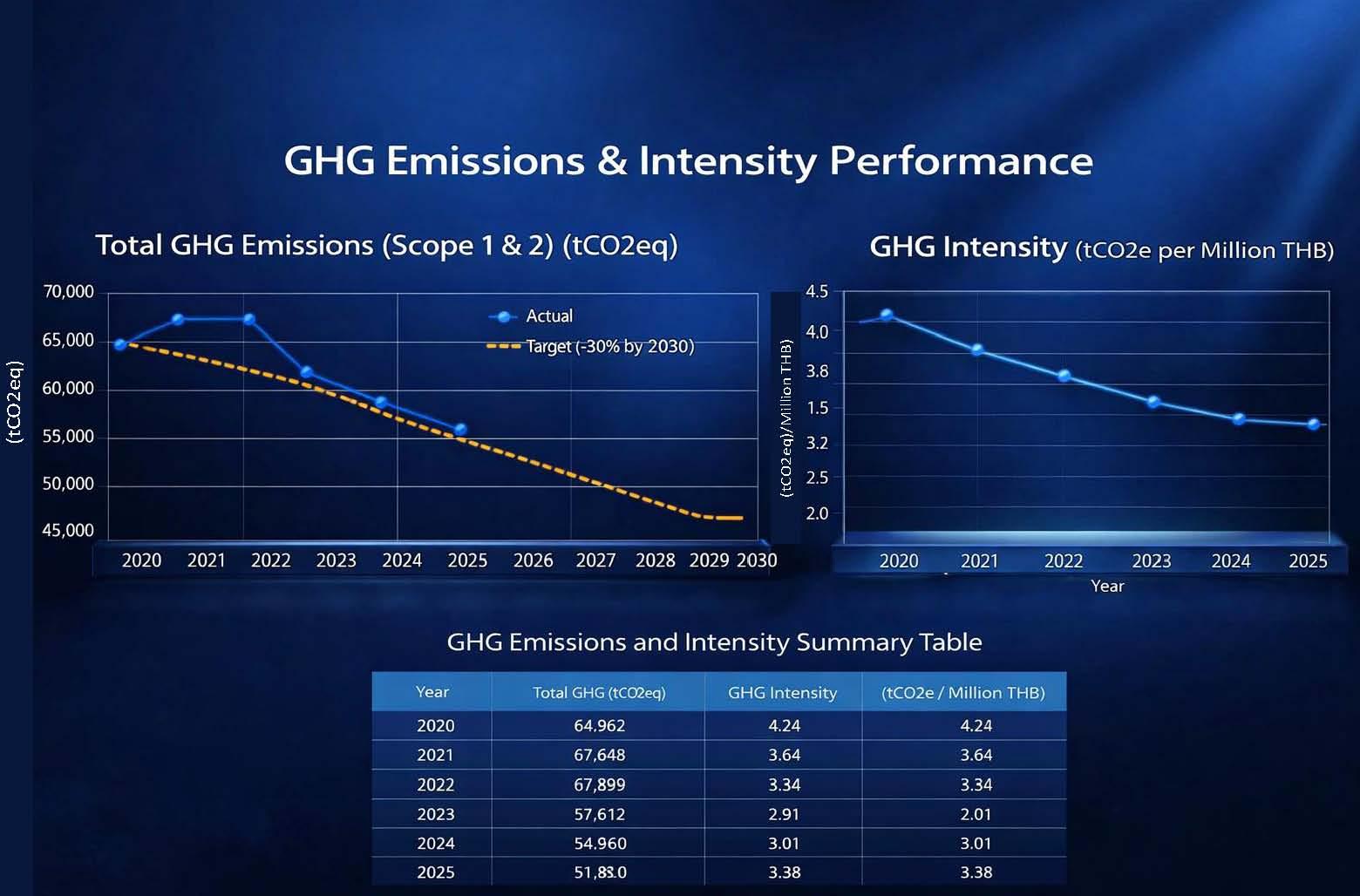
Total GHG emissions: 51,880 tCO2eq, representing a 20% reduction from the 2020 base year of 64,962 tCO2eq. This reduction reflects the Company’s ongoing efforts to enhance operational efficiency, optimize production processes, and implement energy-saving initiatives across its primary manufacturing sites in Lamphun and Ayutthaya.
GHG intensity: 3.38 tCO2eq per million THB of sales, a 20% reduction from the base year. While intensity metrics are influenced by fluctuations in revenue and production volumes, they demonstrate tangible progress toward the Company’s long-term decarbonization goals.
Scope 2 emissions: Remain the largest contributor to total emissions. Reductions were achieved through a combination of lower electricity consumption, targeted energy efficiency measures, preventive maintenance, and process optimization initiatives.
Renewable energy impact: Solar rooftop installations generated approximately 9.5 GWh in 2025, reducing reliance on grid electricity and directly contributing to lower Scope 2 emissions. These renewable energy initiatives also support cost savings and demonstrate measurable outcomes of the Company’s decarbonization investments.
Target revision and rationale: In 2025, the Company revised its 2030 GHG intensity reduction target from 40% to 30%, based on historical performance trends, operational realities, and achievable efficiency improvements. This ensures that the target remains realistic, measurable, and aligned with the Company’s long-term decarbonization pathway, while maintaining meaningful progress toward emissions reduction.
Ongoing commitment: Hana continues to monitor, verify, and improve its GHG performance, integrating energy efficiency, renewable energy deployment, and process enhancements to support both short-term reductions and the long-term 2030 intensity target.
Total GHG emissions and intensity for 2020–2025, with yearly targets, are summarized as follows:
Year | Total GHG Emissions (tCO2eq) | GHG Intensity (tCO2eq per million THB of sales) | Performance vs Base Year | Yearly Target Reduction (%) |
2020 (Base year) | 64,962 | 4.24 | - | - |
2021 | 67,648 | 3.64 | -14% | -5% |
2022 | 67,890 | 3.34 | -21% | -10% |
2023 | 57,612 | 2.91 | -31% | -14% |
2024 | 54,960 | 3.01 | -29% | -18% |
2025 | 51,880 | 3.38 | -20% | -20% |
Note: In 2025, the Company revised its methodology for calculating GHG intensity, which is defined as total greenhouse gas emissions divided by total sales revenue. The Company also restated historical data for prior years (including the base year) to ensure consistency with the updated methodology and to enable appropriate comparison of performance.
Key Drivers of Performance
Positive Drivers:
Energy efficiency improvement projects
Process optimization and preventive maintenance
Increased use of renewable energy (solar rooftop installations)
Challenges:
Dependence on grid electricity (Scope 2 emissions)
Variability in production volume and product complexity
Revenue fluctuations affecting intensity metrics
Future Plans:
In 2026, the Company has been selected to participate in the Science Based Targets (SBT) for Net Zero Promotion Project organized by TGO and Thammasat University. This initiative will support the development of science-based targets and strengthen the Company’s long-term decarbonization pathway.
The Company will continue to enhance environmental data coverage, expand reporting boundaries, and strengthen performance monitoring systems to support transparency and continuous improvement.
GHG Emission Management and SDG Alignment
Hana’s greenhouse gas (GHG) management focuses on reducing emissions, improving energy efficiency, and increasing the use of renewable energy across its operations. These initiatives support the Company’s decarbonization pathway and long-term sustainability targets. The Company’s GHG management contributes to the following United Nations Sustainable Development Goals (SDGs):
Primary SDG:
SDG 13: Climate Action
The Company reduces greenhouse gas emissions through decarbonization initiatives, energy efficiency improvements, and continuous monitoring aligned with its long-term emission reduction targets.
Supporting SDGs:
SDG 7: Affordable and Clean Energy
The Company increases the use of renewable energy, including solar rooftop installations, to reduce reliance on conventional energy sources.
SDG 12: Responsible Consumption and Production
Process optimization and preventive maintenance improve resource efficiency and reduce energy consumption across operations.
Environmental Legal Incidents
Legal Violation Incidents
| Metric | Current Year | Previous Year | Two Years Ago |
|---|---|---|---|
| Number of cases or incidents of legal violations or negative environmental impact (cases) | 0 | 0 | 0 |
Employees — Plan & Guidelines
Has an Employee Management Plan
Yes
Plan Description
Empowering Human Capital
Employees
Employees as internal stakeholders within the organization play an important role in contributing to the long-term success and performance of the corporation. Our key focus is to retain deserving and talented employees while employee satisfaction is important for them to remain happy and also deliver their level best.
Our guidelines and operating results with responsibility towards employees are as follows:
• Respect Human Rights
Hana aims to conduct its business with ethics holding on to our responsibility to society and all groups of stakeholders based on the corporate governance principles and the code of conduct. For human rights protection, the Company has complied with laws and international standards, especially giving support to and complying with Universal Declaration of Human Rights (UDHR), United Nations Global Compact (UNGC), United Nations Guiding Principles on Business and Human Rights (UNGP) and the International Labor Organization (ILO) Declaration on Fundamental Principles and Rights at Work. The Company recognizes and has put in place labor practices by respecting human rights in regard to the fairness, equality and non-discrimination both in terms of employment, compensation, promotion, training and development without discrimination of age, gender, educational institution, race and religion, as well as supporting employment for disadvantaged groups in order to create opportunities, career path and a more income with the goals achieving the Sustainable Development Goals (SDGs).
Employment/Termination - Hana is committed to promoting equal opportunities in employment, promotion and termination, and firmly opposes discrimination based on race, nationality, color, religion, gender, age, disability, marital status, political affiliation, union membership, sexual orientation, or any other legally protected status.
All employees are treated and evaluated solely by their ability to meet job requirements. To promote workforce diversity, foster inclusion, and reduce discrimination, Hana’s recruitment process eliminates bias by not requesting personal information such as age, religion, gender, nationality, or disability. These initiatives ensure a diverse, inclusive, and equitable workplace where all employees can thrive and contribute to the Company’s growth.
Child Labor - Hana has a policy prohibiting the employment of children below the legal working age in each country in which we operate. We do not support child labor throughout our supply chain, in alignment with the Responsible Business Alliance (RBA) Code of Conduct in the Electronic Industry Citizenship Coalition (EICC), which has set standards to ensure that working conditions in the electronics industry and industries in which electronics are a key component as well as across their supply chains, are safe for employees. Child labor must not be used at any stage of manufacturing.
Social Protection - Our compensation policy is fair and reasonable according to employees’ capability by considering the packages with the same industry and in accordance with their position, experience and their performance in the Company as well as the economic and social situation. Moreover, the Company provides various employees’ welfare for example annual vacation, overtime with the consent of employees, medical treatment, employees’ cooperatives and other welfares such as group life and accident insurances, annual health check, special vaccination such as Influenza vaccine, employee fitness center, library at certain location, etc. More importantly, the Company provides the children’s education allowance for children of low-income employees.
Employee Remuneration - The Company has a policy on remuneration and welfare for employees. Employee performance appraisal is used as a method for regular review of an employee’s job performance evaluation with specified criteria and feedback on their work taking into account the duties and responsibilities, economic conditions, living conditions, legal wage rate to justify employees’ remuneration. Compensation paid to employees is complied with all applicable wage laws, including those relating to minimum wages, overtime payment, and legally mandated benefits. For remuneration process, aside from semi-annual individual employee performance appraisals and benchmark with employees in the same group along with the aforementioned conditions, our Corporate Human Resources Department also conducts an employee remuneration survey, on a yearly basis, in collaboration with the Electronic and Computer Employers’ Association and the independent consulting firms for the remuneration survey with the same industry in consideration as the fairly basis of employees’ remuneration adjustment to be in line with the industry and labor market conditions.
In addition, the Company provides compensation to employees in line with their performance in both the short term such as bonuses and the long-term performance through Career Development Program which has been continuously provided to employees in order to define the development of skill sets and identify how individuals move through the organization. The career development process has considerable benefits from both an individual employee and an overall organizational perspective. The Company has set the policy and the committees to assess potential candidates, identify the core competencies and perform assessment to verify candidates’ abilities and determine strengths and weaknesses to match with currently holding position and the readiness for advancement of each candidate, and plan for training and other development tools.
The Company has provided the long-term welfare benefits that retain and motivate employees, particularly for the retirement benefits and the provident fund to help employees to save a portion of their salary in the event of retirement, disability, sickness or unemployment. The Company’s provident fund is an alternative saving scheme for retirement where employees contribute a portion of their salaries, and the Company makes the contribution equal to the rate of the employee’s savings. Employees will benefit from the savings provided by the provident fund management in the form of investment. In summary, the Company has provided various welfare programs for employees to provide them with better life, to make them happy and satisfied, to keep the moral and motivation of employees high, and to raise their standard of living so as to retain our employees for longer duration.
Summary of welfare program provided to employees:
Economic Betterment
Retirement benefits
Provident fund and social security fund
Hana cooperative fund
Shift allowance
Attendance allowance
Incentive for employees who contribute to CIP (Continuous Improvement Program)
Long service award
Healthcare Improvement
Life and accident insurance
Annual physical check-up and specific test in case the work environment can affect health
Influenza vaccination
Medical benefits
Nursing room for first aid clinic
Fitness center and stadium
Health promotion programs, including training sessions to educate employees on the prevention ofdiabetes, hypertension, and cardiovascular diseases, as well as work-related musculoskeletal disorders (Office Syndrome), and issues related to stress and mental health.
Provide affordablehelmets to employees for safe driving
Family Support
Right to leave for vacation, sick leave, maternity leave, etc.
Employee assistance program, i.e. maternity benefit, employee death benefit, disaster victim, etc.
Child education support
Amenities and Others
Uniform
Canteen and low-price consumer goods
Dormitory
Transportation
Recreation activities
Women in the Workplace - Hana promotes women’s human rights and no gender-based discrimination in terms of employment, compensation, promotion, training and development of employees.
Disability Inclusion at Work - Hana supports projects of the government to protect the rights of disabled persons to provide them with employment opportunities. The Company employs persons who are disabled and arranges the appropriate job matching to their capability. The Company also improved workplace environment to enable employees with disabilities to have easier access to the Company’s facilities. Furthermore, Hana also arranges a place for disabled persons to open shops in the factory compound at no cost, which gain the good support from employees.
Labor Relations - Hana’s Welfare and Employee Relations Policy is committed to social responsibility and adheres to the good labor practices: listen to every voice of employees fairly, strengthen culture and working atmosphere, encourage teamwork, and realize that every employee is important and valuable to the Company’s success and sustainable growth. The Welfare and Labor Relations Committee is to facilitate collective bargaining at the workplace including employee benefits and privileges, provide opportunities for executives and employees to discuss, make suggestions, file complaints, and suggest ideas with management for decision-making and problem solving.
Employee Satisfaction Survey - Hana realizes the importance of employee satisfaction. The Company conducts the employee satisfaction surveys for both daily and monthly employees twice a year to encourage them to provide comments and suggestions as to improve the organization in various areas covering wages and welfare, work environment, job assignment, career advancement, supervisor, colleague, etc.
Long Service Award - The Company recognizes the importance of employee engagement. There are also long service awards annually held to promote morale and pride of employees who are dedicated to working with the Company for long time and are an important part of the success and growth of the Company.
Human Resources Development - Hana is committed to equal opportunities and to ensure that individuals are treated equally and fairly based on the assessment of employee’s development needs, competencies, organizational needs irrespective of their gender, age, marital status, disability, race, color, ethnic or national origin or sexual orientation. Employees are expected and encouraged to take ownership and responsibility for their personal training and development including training evaluation/effectiveness monitoring in relation to their work, within the framework of support provided by the organization.
This is to ensure that the employees have the competence to perform their jobs effectively and to encourage the employees to maximize their potential and contribution by supporting the overall strategic business plan and objectives in short and long term. Besides, the Company has provided employees of all levels understanding of their future career opportunities. This leads to increased motivation, morale and job satisfaction among the employees.
Employee Training and Competency-Based Development - Hana has always recognized the need to develop its employees as the most important asset in the organization through employees’ development program and employees’ training program. The Company has provided training to employees both daily and monthly employees at all levels, including operators, staff and managers. The training focuses on short-term and long-term development, consists of new employee orientation in order to familiarize the employees to new organizational culture and environment, and other training needed for work such as quality system, health and safety at work, 5S, Code of Conducts, etc. from internal and external instructors to upskill and reskill the employees to effectively perform current job functions and to be prepared for future changes and work opportunities. In addition to external training from outside professional trainers, the Company also encourages expertise across departments by turning our employees into trainers with the goals to promote learning organizational culture including enhancing the competency of personnel in the organization.
Training Need Survey - The Company arranges the annual survey of training needs from the opinion survey of management and supervisors in consideration of both internal and external factors. The internal factors are job positions, performance assessment according to the competency of each job position, project evaluation such as CPDP Program, technician and line leader development program and business strategic plan. The external factors are customers’ requirements, technological advancement, requirement of legal and international standards, etc.
In addition, the Company provides opportunities for employees to participate in the introduction of useful training courses through the suggestion box and employee satisfaction survey forms. The results of the surveys is considered and carried out for annual training plan as well as individual development plan (IDP).
Safety, Health, and Environment at the Workplace - The Company prioritizes employee development and focuses on both their physical and mental well-being. Since 2005, the Company has been certified under OHSAS 18001 and TIS 18001, which are international and Thai occupational health and safety management systems. In 2019, the certification transitioned to the new ISO 45001 standard. The Company is committed to continuously improving environmental and safety standards, promoting the health and well-being of employees and stakeholders, and upholding social responsibility and labor standards while conducting business operations.
Improving Health and Well-Being at Work - The Company has established and annually approves a workplace health and safety plan aimed at preventing work-related injuries and diseases while fostering a healthy organization. In 2025, activities focused on improving employees' health and well-being included training and raising awareness about workplace health and safety, as well as implementing, monitoring, and evaluating measures such as epidemic prevention. Additionally, the Company provided training to promote employee safety and well-being.
Plan Areas
| Plan Area |
|---|
| Fair employee compensation |
| Employee training and development |
| Promoting employee relations and participation |
| Migrant/foreign labor |
| Child labor |
| Occupational health and safety in workplace |
Employees — Workforce
Workforce Data
| Metric | Current Year | Previous Year | Two Years Ago |
|---|---|---|---|
| Total number of employees (Persons) | 5,418 | 5,783 | 6,450 |
| Number of male employees (Persons) | 1,803 | 1,899 | 2,080 |
| Number of female employees (Persons) | 3,615 | 3,884 | 4,370 |
| Total employment of disabled persons (people) | 82 | 88 | 89 |
| Total disabled employees (people) | 37 | 39 | 39 |
| Total male disabled employees (people) | 18 | 20 | 21 |
| Total female disabled employees (people) | 19 | 19 | 18 |
| Total disabled workers who are non-employee (people) | 45 | 49 | 50 |
| Contributions to the fund for promoting and improving the quality of life for disabled persons | 0 | 1 | 0 |
| Total number of male employees in operational level (Persons) | 1,665 | 1,763 | 1,945 |
| Total number of male employees in management level (Persons) | 133 | 131 | 130 |
| Total number of male employees in executive level (Persons) | 5 | 5 | 5 |
| Total number of female employees in operational level (Persons) | 3,535 | 3,806 | 4,292 |
| Total number of female employees in management level (Persons) | 79 | 77 | 77 |
| Total number of female employees in executive level (Persons) | 1 | 1 | 1 |
Employees — Remuneration & Provident Fund
Remuneration & Provident Fund
| Metric | Current Year | Previous Year | Two Years Ago |
|---|---|---|---|
| Total disabled employees (people) | 2,344,526,936 | 2,426,142,634 | 2,521,603,440 |
| Total male employee remuneration (Baht) | 1,058,747,347 | 1,085,467,890 | 1,099,598,673 |
| Total female employee remuneration (Baht) | 1,285,779,589 | 1,340,674,744 | 1,422,004,767 |
| Number of employees eligible to participate in PVD (persons) | 5,128 | 5,498 | 6,071 |
| Total number of employees joining employee provident fund (Persons) | 4,961 | 5,248 | 5,688 |
| Percentage of total number of employees joining employee provident fund to total number of employees (%) | 91.57 | 90.75 | 88.19 |
| Number of PVD members / Total eligible employees (%) | 96.74 | 95.45 | 93.69 |
| Total amount of provident fund contributed by the Company (Baht) | 87,911,125.25 | 89,442,225.5 | 91,419,081.16 |
| Total amount of provident fund contributed by employee (baht) | 87,911,125 | 89,442,225.5 | 91,419,081.16 |
Employees — Training & Development
Training Data
| Metric | Current Year | Previous Year | Two Years Ago |
|---|---|---|---|
| Average employee training hours (Hours / Person / Year) | 53 | 57 | 58 |
| Employee development and training expenses (baht) | 227,957.88 | 123,061 | 511,537.68 |
Employees — Occupational Health & Safety
Occupational Health & Safety Data
| Metric | Current Year | Previous Year | Two Years Ago |
|---|---|---|---|
| Total number of lost time injury incidents by employees (Cases) | 0 | 0 | 0 |
Employees — Labour Relations
Labour Relations Data
| Metric | Current Year | Previous Year | Two Years Ago |
|---|---|---|---|
| Total voluntary resignations (Persons) | 973 | 1,033 | 1,326 |
| Male employees who voluntary resigned (Persons) | 238 | 286 | 422 |
| Female employees who voluntary resigned (Persons) | 735 | 747 | 904 |
| Percentage of employee turnover leaving the Company voluntarily (%) | 17.96 | 17.86 | 20.56 |
| Evaluation result of employee engagement | 1 | 1 | 1 |
Employees — Employee Representation
Employees Are Represented Collectively
Yes
Forms of Representation
| Form |
|---|
| Welfare committee |
| Labor relations committee |
| Employee committee |
Employees — Targets
Introduction
Training Hours Per Employee Per Year: Target 50 hours
Employee Satisfaction: Target 78%
Employee Engagement in Organizational Innovation towards Hana 4.0 Roadmap: Target 80%
Workplace Accident: Target 0 cases
Has Set Employee Targets
Yes
Targets
| Indicator | Target Areas | Base Year | Base Year — Description | Target Year | Target Year — Description |
|---|---|---|---|---|---|
| • Training Hours Per Employee Per Year • Employee Satisfaction • Employee Engagement in Organizational Innovation towards Hana 4.0 Roadmap • Workplace Accident | 2984 · Description: Employee training and development · 2985 · Description: Promoting employee relations and participation · 2988 · Description: Safety and occupational health at work | 2,025 |
• Target: 50 hours/employee/year
• Target: 78%
• Target: 80%
• Target: 0 cases | 2,025 |
• Actual Performance: 53 hours/employee/year
• Survey Result: 82.5%
• Actual Performance: 92%
• Actual case: 0 |
Employees — Performance & Outcomes
Has Performance Results
Yes
Performance Description
Human Rights, Fair Labor Practices, Employment/Termination, Child Labor - In 2025, there were no complaints or cases of human rights violations regarding labor.
Women in the Workplace - Gender information disclosure of employees classified by level in 2025 is as follows.
Total Number of Employees of the Company and its Subsidiary by Position and Gender (Person)
Position | Female | Male |
Executive | 1 | 5 |
Management | 79 | 133 |
Employee | 3,535 | 1,665 |
Total | 3,615 | 1,803 |
Number of Employees of Hana Microelectronics Public Co., Ltd. by Position and Gender (Person)
Position | Female | Male |
Executive | 1 | 3 |
Management | 40 | 61 |
Employee | 1,928 | 863 |
Total | 1,969 | 927 |
Number of Employees of a Subsidiary - Hana Semiconductor (Ayutthaya) Co., Ltd. by Position and Gender (Person)
Position | Female | Male |
Executive | - | 2 |
Management | 39 | 72 |
Employee | 1,607 | 802 |
Total | 1,646 | 876 |
Note: Data as of 31 December 2025
Disability Inclusion at Work - According to Empowerment of Persons with Disabilities Act, B.E.2550 (2007) Section 33 and 35, the number of hiring persons with disability of the Company and its subsidiary in Thailand greater than the hiring ratio (1 disabled person to every 100 non-disabled employees – 1:100) stipulated by law as follows.
Number of People with Disabilities per Total Workforce
(as at the Report Date to the Department of Empowerment of Persons with Disabilities)
Information on the Employment of Persons with Disabilities | 2023 | 2024 | 2025 |
Ratio of employees with disabilities to non-disabled employees | |||
| 35:3,139 | 33:3,014 | 31:2,896 |
| 54:3,311 | 55:2,769 | 51:2,522 |
| 89:6,450 | 88:5,783 | 82:5,418 |
Total Payment to the Fund for Empowerment of Persons with Disabilities (Baht) | - | 68,574.47 | - |
Note: Data as of the Reporting Date to the Department of Empowerment of Persons with Disabilities
In addition, our Hana Jiaxing in China has continued hiring people with disabilities to suit their job positions even no legal obligation.
Labor Relations - In 2025, the Company did not have any significant labor disputes.
Employee Training and Development:
E-Leaning and Online Training - Online training on the internet has been promoted as an advanced technology by moving from the traditional training method which offers more convenience for employees to participate in more flexible training or seminars conducted by various organizations which can gain the learning outcomes according to the corporate objectives. In addition, employees can gain knowledge through Hana’s E-Learning website to minimize time constraints and restrictions of place. The instructors can customize learning ideas in numerous methods while learners can choose topics of study fitting their own interest on Hana’s website which is to provide essential e-materials, VDO clips and self-test evaluation as options and opportunities for employees to learn anytime.
Cyber Security Course by Trainingand IT Team As technology plays an increasingly critical role in operations—both in manufacturing processes and office functions—the widespread use of computer systems and internet connectivity has become essential. The Company places great importance on cybersecurity to mitigate risks from cyberattacks, prevent data breaches, and safeguard critical organizational information. Hence, the Cybersecurity training program has been implemented to raise employees’ awareness of information security, equip them with knowledge on data protection, and promote understanding of cybersecurity measures. The program also covers relevant standards, including the ISO/IEC 27001 Information Security Management System.
Money Management Course by Hana Lamphun Management - The Company places strong emphasisn financial stability and sustainability at both the organizational and employee levels.Employees’ financial discipline contributes to improved quality of life, reduces household economic risks, and supports long-term shared sustainability. Accordingly, the Company has implemented a training program designed to educate and motivate employees to save and manage their finances systematically and with discipline. The program covers financial planning for the future and retirement preparedness. In 2025, a total of 290 employees participated in this program.
Training Courses and Training Hours - The Company have organized a variety of training courses aligned with the business plan, strategies, and customer requirements, while also addressing the needs of supervisors and individual employees. In 2025, a total of 150,316.25 training hours were provided to employees across a broad range of courses, categorized as follows:
Training Courses | Number of Training Hours | % | ||
Daily Employees | Monthly Employees | Total Hours | ||
Technical Skills | 19,613.45 | 17,275.50 | 36,888.95 | 24.54 |
Quality Skills | 15,118.00 | 13,789.20 | 28,907.20 | 19.23 |
Professional Re-certification | 21,981.00 | 4,741.00 | 26,722.00 | 17.78 |
Management Skills | 1,067.00 | 19,527.25 | 20,594.25 | 13.70 |
General Skills | 8,867.15 | 8,782.20 | 17,649.35 | 11.74 |
Safety and EMS | 5,130.30 | 3,895.15 | 9,025.45 | 6.00 |
Computer & Technology Skills | 3,099.25 | 5,782.80 | 8,882.05 | 5.91 |
Multi-Skills | 1,433.00 | 3.00 | 1,436.00 | 0.96 |
Job Transfer | 208.00 | 3.00 | 211.00 | 0.14 |
Total | 76,517.15 | 73,799.10 | 150,316.25 | 100 |
The average training hours per employee per year, covering both monthly and daily-paid staff, compared against the KPI for 2025 and the previous years, are detailed as follows:
Average Training Hours per Employee per Year | 2025 | 2024 | 2023 |
KPI | 50 | 50 | 50 |
Result | 53 | 57 | 58 |
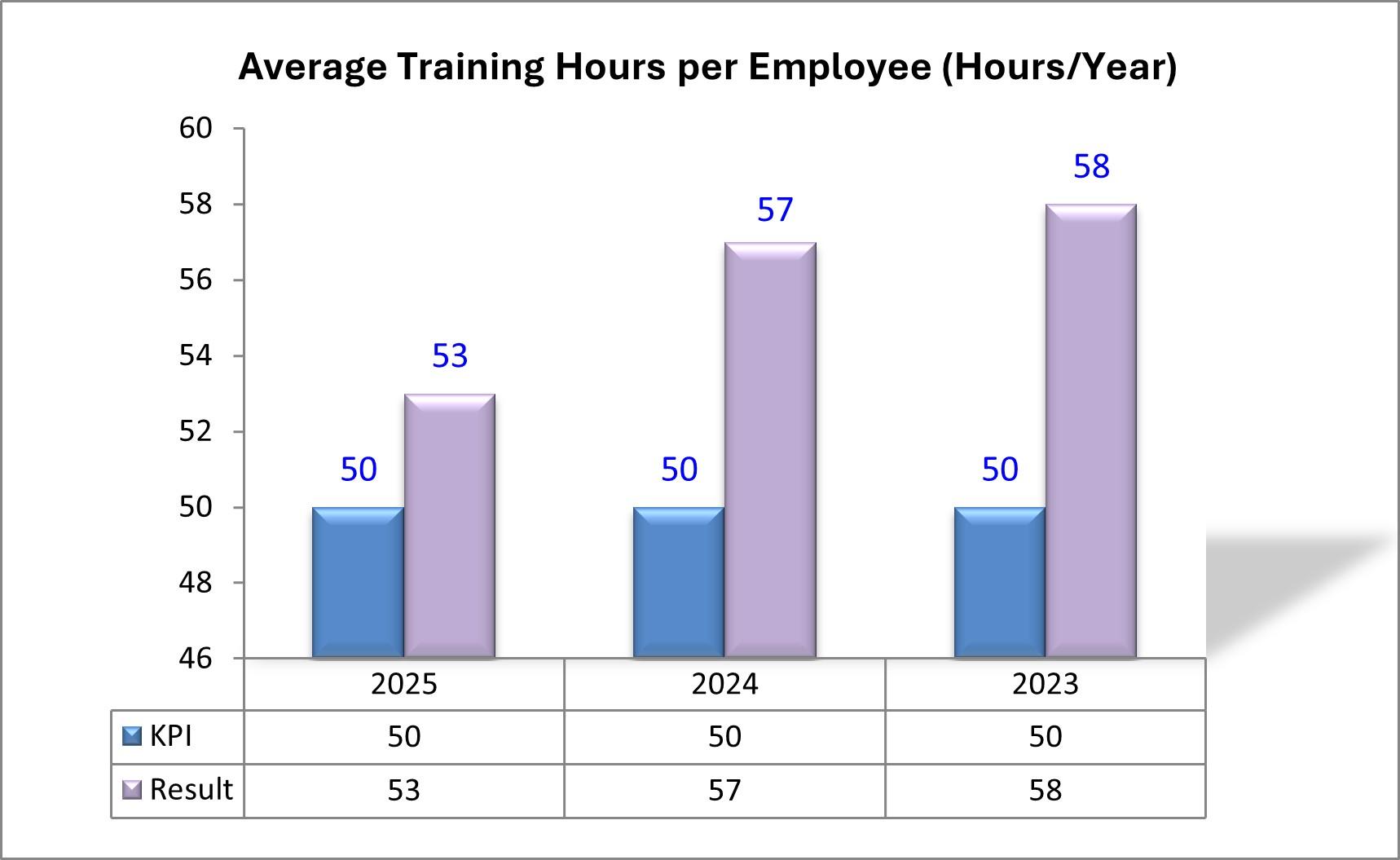
In addition to the aforementioned training programs, the Company has implemented key employee development initiatives as follows:
Career Path Development Program (CPDP) - To support sustainable growth, the Company has implemented the Career Path Development Program since 2011, along with the Talent Program since 2016. These initiatives focus on developing senior employeesat the M1/T1 level and above, ensuring equal opportunities to participate in a structured selection process for inclusion in the programs. Participants receive systematic training and capability development across multiple dimensions, including technical competencies, leadership skills, and readiness for higher-level roles.
The primary objectives of these programs are to support succession planning, retain potential employees over the long term, and promote career advancement in alignment with the Company’s growth. In addition, the programs provide a platform for participants to share expertise, exchange perspectives and viewpoints with management, and offer constructive feedback to support organizational development. This helps strengthen internal collaboration and connectivity across the organization. The programs are carefully designed to align with the Company’s expectations, goals, and strategic direction, while also fostering employee strengths and encouraging active engagement.
Since the start of the programs, a total of 714 employees has been selected to participate in these development programs. In 2025, 123 employees from Hana Lamphun and Hana Ayutthaya joined the program, reflecting the Company’s ongoing commitment to human capital development, strengthening the readiness of future leaders, and supporting sustainable organizational growth in the long term.
Technician and Line Leader Development Program - To increase potential of employees whose duties required specialized expertise including a group of junior-level supervisors to grow further and retain potential personnel in the organization. The Company has initiated development programs for both potential groups to strengthen their skills in performing tasks and growing along with the organization. There were 87 and 91 employees selected to undergo the training programs in 2025, representing 33% and 74% respectively of employees in the same groups.
Both of the above projects create benefits to both employees and the organization such as:
Value to the Organization: The program facilitates smoother and more effective internal promotions. Employees can apply the knowledge gained as a basis for analytical thinking to reduce costs, shorten processing time, and increase sales through the Continuous Improvement Program (CIP). As a result of the Improvement Projects implemented, the Company achieved total cost savings of 7,633,410 Baht.
Value to Employees: To develop skills, abilities and expertise necessary to align with individual career goals, job stability and economic security encouraging opportunities to develop oneself along with the Company’s growth.
Internal Knowledge Sharing Programby Internal Trainers - This program is designed to ensure that employees understand their responsibilities and perform their work correctly, in accordance with company principles, regulatory requirements, legal standards, and customer expectations. It aims to elevate work quality, reduce operational risks, and enhance overall efficiency. In 2025, Hana Lamphun and Hana Ayutthaya benefited from the contributions of a total of 189 internal experts who shared their knowledge and expertise with employees.
Value to the Organization: This program helps develop employees’ skills and knowledge through learning from internal experts and best practices, enabling them to work more efficiently, reduce errors, and address problems effectively. It also lowers costs associated with external training. In addition, internal trainers have a strong understanding of the company’s environment and culture, allowing them to deliver content and provide guidance that is tailored to actual work contexts and objectives, while promoting effective collaboration and coordination across the organization.
Value to Employees: Employees who serve as internal trainers have the opportunity to develop their expertise, communication skills, teaching abilities, and coaching techniques, while also gaining new insights and perspectives from participants. At the same time, employees benefit from learning directly from experts with specialized technical knowledge and best practices within the organization, enabling them to perform tasks accurately, reduce risks in critical processes, and solve problems independently. This program enhances employees’ competencies and potential, fosters a culture of continuous learning and self-development, and allows them to apply knowledge in real work situations, increasing confidence and overall work performance.
Engineer Development Program - This program is designed to strengthen engineering capabilities to support the Company’s expansion, growth, and evolving business needs. It also aims toprepare and develop future middle management while encouraging employees to acquire knowledge in emerging technologies, automation systems, and innovative design.These efforts enhance the Company’s global competitiveness and alignwith the Hana 4.0 policy. In 2025, Hana Lamphun selected 92 employees to participate in the program, representing 42% of the engineering workforce in this group.
Value to the Organization: The program facilitates smoother and more effective internal promotions. Employees can apply their knowledge to analytical thinking and problem-solving approaches that help reduce costs, shorten processing time, and increase sales through the Continuous Improvement Program (CIP). As a result of the Improvement Projects implemented, the Company achieved cost savings of 2,032,579 Baht.
Value to Employees: Employees can gain essential skills, capabilities, and expertise aligned with their career goals, enhancing career stability and compensation prospects. The program also supports continuous self-development, enabling employees to grow alongside the Company while strengthening knowledge and competencies required to advance into middle management and higher leadership roles in the future.
Employee Scholarship Program - To enhance employee capabilities and promote career advancement in alignment with the Hana 4.0 strategy, as well as to support the development of Thailand 4.0 industries, the Company has entered into a Memorandum of Understanding (MoU) with the Faculty of Engineering, Rajamangala University of Technology Lanna, Chiang Mai, aiming to foster the continuous and sustainable development of high-quality human resources. Under this partnership, the Company provides scholarships to employees pursuing further education in fields that are critical to advancing the Company’s technological capabilities and automation systems.
The scholarship support for the period 2022–2025 is summarized as follows:
Year | Level of Degree | Major | Number of Scholarship | Amount (Baht) |
2022 | Bachelor’s | Electronic Engineering and Automation Control Systems | 20 | 3,000,000 |
2023 | Bachelor’s | Software Engineering | 10 | 2,000,000 |
2024 | Bachelor’s | Electronic Engineering and Automation Control Systems | 11 | 2,200,000 |
Master’s | Electronic Engineering | 3 | 600,000 | |
2025 | Bachelor’s | Software Engineering | 7 | 700,000 |
Master’s | Engineering | 10 | 1,500,000 | |
Total Scholarship Awarded during 2022 - 2025 | 61 | 10,000,000 | ||
These scholarships cover undergraduate programs aligned with the Company’s core technological fields—including innovation, automation systems, and software development—as well as advanced knowledge development at the master’s level. This initiative plays a vital role in enhancing production efficiency, improving product quality, and strengthening systematic, data-driven management capabilities.
The provision of scholarships and collaboration with academic institutions reflect the Company’s strong commitment to investing in “human capital” in a tangible manner, as well as building an internal talent development ecosystem that grows in parallel with future technological directions. In addition, the Employee Scholarship Program strengthens employee motivation and engagement by providing long-term learning and development opportunities. This enables the Company to retain high-potential talent, support career advancement, and ensure workforce readiness to accommodate future business expansion and transformation. At the same time, collaboration with academic institutions contributes to the broader ecosystem of engineering workforce development in Thailand by bridging knowledge between academia and industry, and by supporting the sustainable achievement of Thailand 4.0 objectives across organizational, community, and economic dimensions.
Engaging Employees in Sustainability:
Employee engagement in the innovation-driven organization towards Hana 4.0 roadmap - The Company has implemented the innovation-driven organization project to support the Hana 4.0 strategy, focusing on sustainably enhancing operational efficiency through driving innovation from within the organization, especially in terms of continuous improvement and the implementation of technology to increase efficiency in work processes (Process Innovation) with the aim of promoting an organizational culture that supports systematic analytical thinking, encouraging employees at all levels to participate in improving operational performance, reducing unnecessary waste and costs, developing teamwork skills and environmental awareness, and driving environmentally and socially friendly production processes (Eco Process).
The Company has established a Continuous Improvement Program (CIP) Department as a key mechanism to drive continuous improvement activities throughout the organization, with a primary role in systematically transmitting policies from senior management to operational levels, to encourage employees to participate in proposing solutions to improve operational performance, creating innovations that can be practically applied, and continuously participating in quality development activities such as Quality Control Circle (QCC), Quality Improvement Project & Kaizen activities through the competitions on CIP Day which is held twice a year. Outstanding projects will be selected to compete in national competitions organized by the Technology Promotion Association (Thailand-Japan), such as the Thailand Quality Prize and the Thailand Kaizen Award. This will benefit the company, the environment, and the community in terms of increasing production efficiency, reducing waste, reducing resource usage, creating innovations that meet actual operational needs, promoting knowledge and learning among employees in the organization, creating organizational engagement and a culture of development that supports ESG (Environmental, Social, Governance) goals for the sustainability of society.
Regarding this organizational culture, the following projects have been created as examples:
Paperless Solution An innovation that brings the organization into digital transformation, enhanceswork efficiency by transition from paper-based processes to paperless both in the office and production. The team responsible consists of management, staff of each department and concerned departments played a key role in supporting and driving the paperless initiative. This made the working process clearer because all workflows are systematic including improving speed and increasingefficiency and most importantly saving costs to the Company while reducing the use of natural resources resulting in the reduction of greenhouse gases, as follows.
Cost reduction: total saving 1,526,552 Baht/year divided into:
Labor cost 1,291,500 Baht
Print & photocopy cost 212,715 Baht
Paper cost 22,337 Baht
GHG emission reduction 1,957 kgCO2e
Employee Engagement Goals and Performance - The Company has consistently exceeded its employee engagement targets under the Hana 4.0 strategy, demonstrating a strong and ongoing commitment to fostering employee participation. The details over the past three years are as follows:
Employee Engagement | 2025 | 2024 | 2023 |
KPI | 80 | 75 | 75 |
Result | 92 | 91 | 84 |
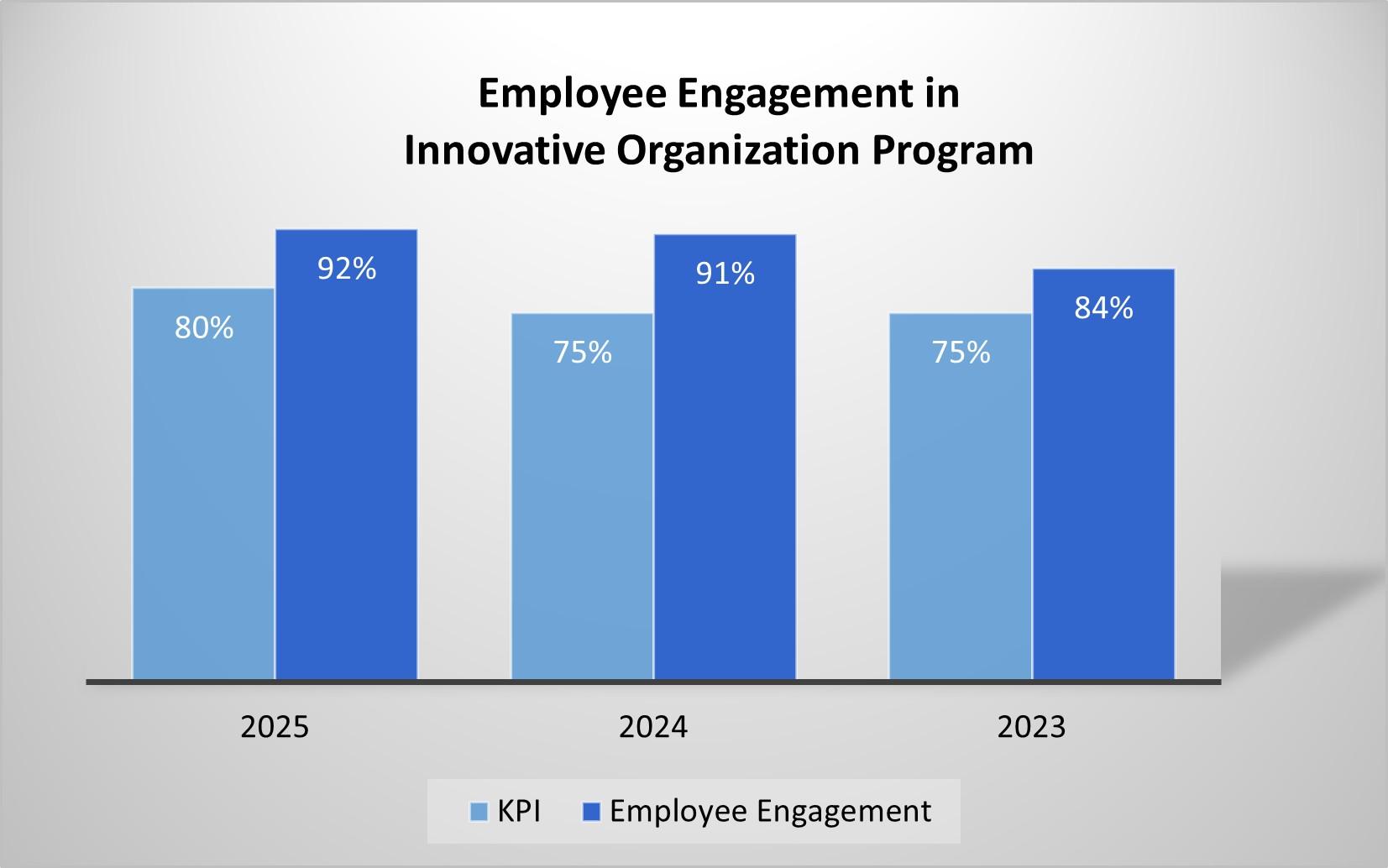
Employee Satisfaction Survey Results - The Company has analyzed the results of employee satisfaction surveys to systematically improve and develop employee engagement. Based on feedback from the latest year, the improvement initiatives have included the provision of electric massage chairs to help reduce fatigue from work, as well as the addition of more tables and chairs in break areas to create a comfortable working environment that meets employee needs. The Company also continues to implement other facility improvements to enhance employees’ quality of life and promote a positive and satisfying work experience.
The results of the employee satisfaction survey, compared with the KPI for 2025 and the previous years, are as follows:
Employee Satisfaction Survey | 2025 | 2024 | 2023 |
KPI | 78 | 78 | 75 |
Result – Daily Employee | 82 | 80 | 75 |
Result – Monthly Employee | 83 | 84 | 74 |
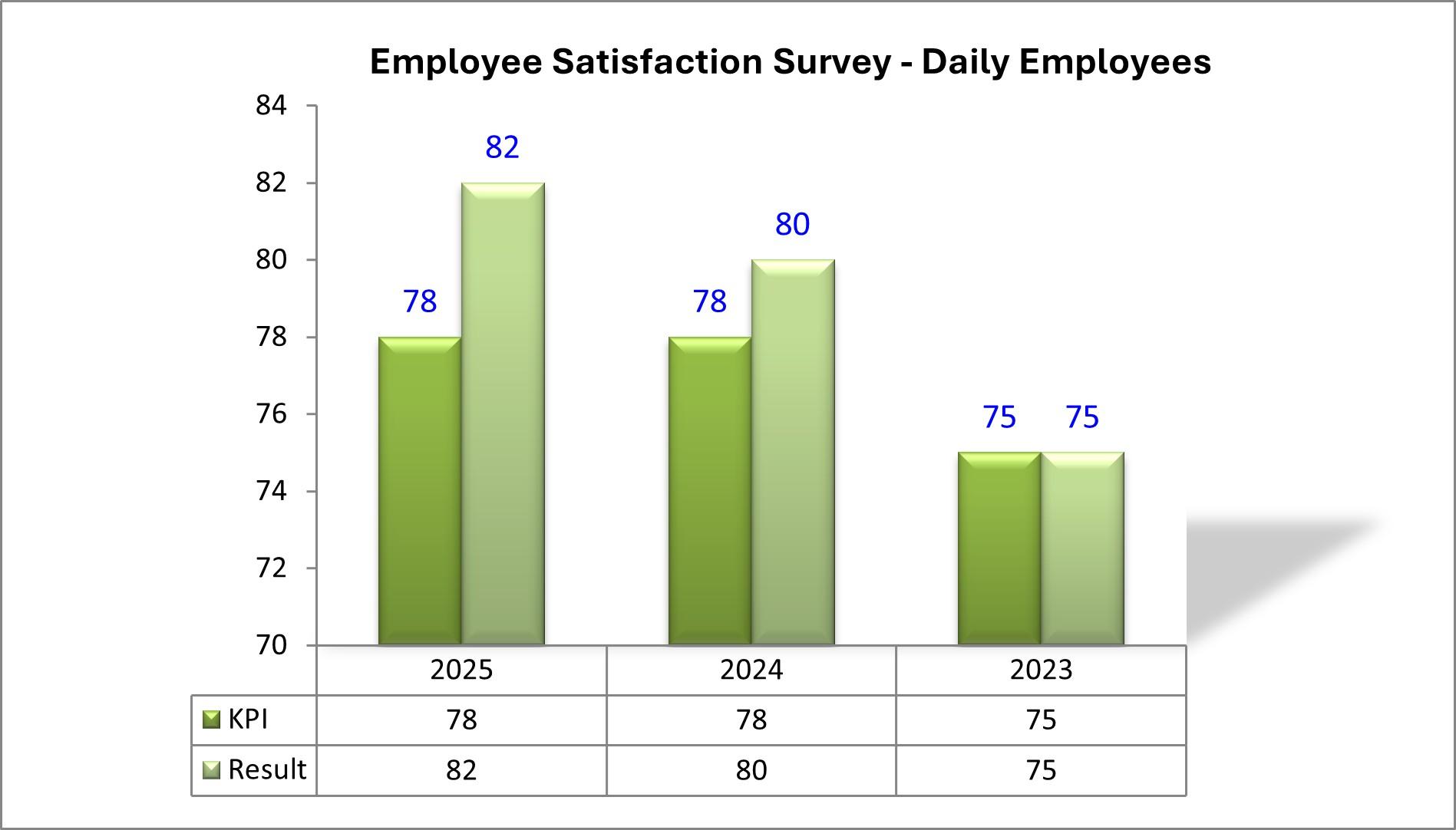
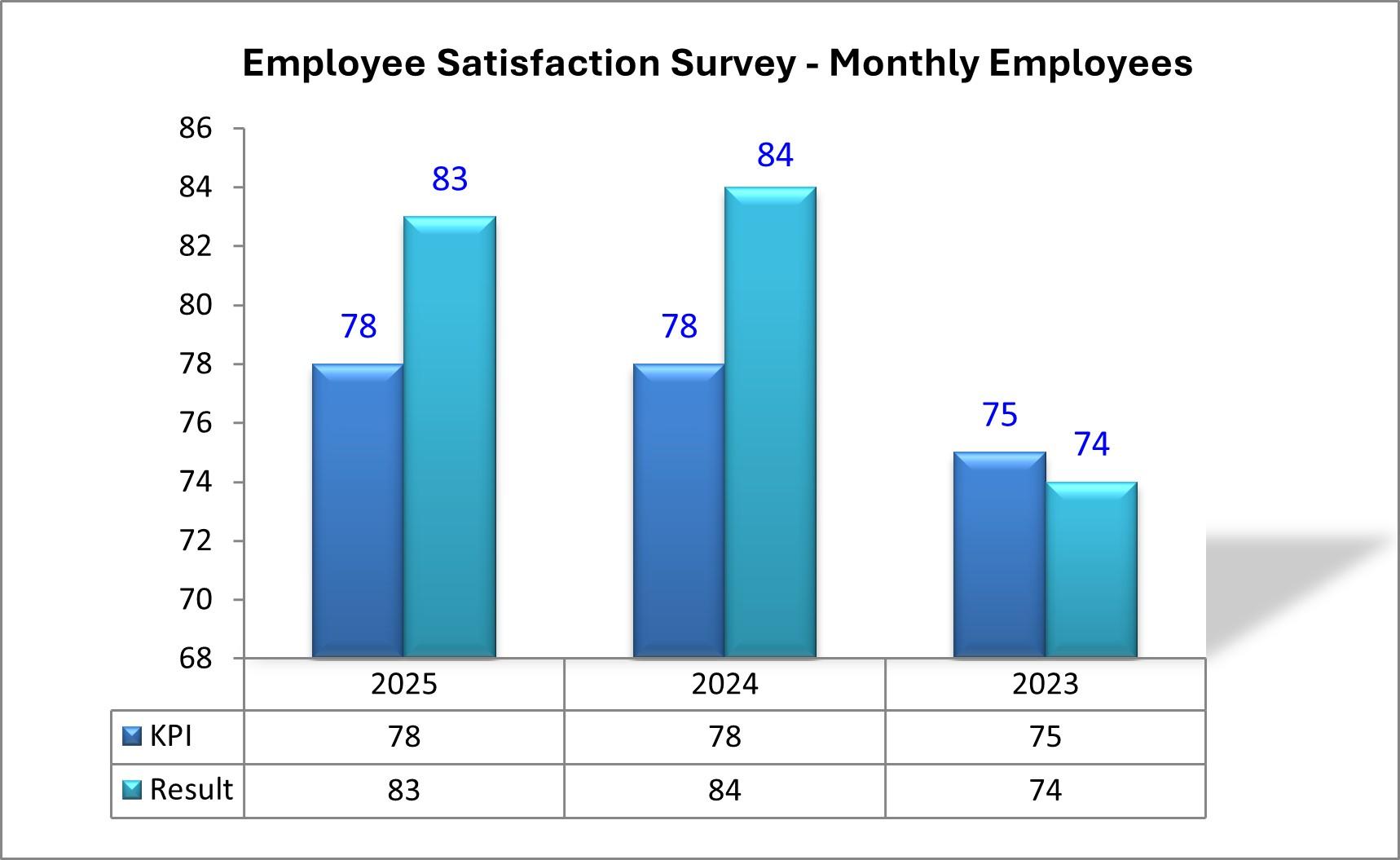
The Company is committed to continuously enhancing employee satisfaction to foster a work environment that promotes both well-being and employee engagement. The survey results have been communicated through public relations boards, canteen bulletin boards, radio announcements, and the Company’s intranet.
Employee Engagement Initiative Projects - The Company implemented the “Rest Area Improvement Project,” which was developed through structured employee engagement processes, including open dialogues to gather employee needs and feedback. As part of this initiative, the Company added more tables and chairs in rest areas, upgraded relaxation spaces, improved the surrounding landscape, and increased green spaces. The total project budget amounted to 60,000 Baht. The project aims to enhance employees’ quality of working life, boost morale, and foster a positive working environment that supports stronger employee engagement. Additionally, the initiative helps create opportunities for meaningful interaction between employees and management through shared activities within the organization.
Long Service Award - In 2025, a total of 713 employees across Hana group in Thailand, received the Long Service Award for their dedication. Employees were recognized for their service milestones ranging from 10 to 40 years, highlighting the commitment and loyalty of staff at various stages of their careers. The recognition reflects the Company's appreciation for long-term contributions and the value of sustained service to the organization.
Promoting Employee Health, Quality of Life and Well-being
Health and Safety Implementation - The Company is committed to providing a safe and hygienic workplace by controlling environmental factors such as lighting, noise, air quality, humidity, and temperature in accordance with established standards. This is to enhance employee productivity while continuously promoting both physical and mental well-being. The Company provides a fitness center and sports facilities at the Hana Sport Complex, including a fully equipped gym with standard equipment and regular weekly exercise classes such as yoga, fitness training, and aerobics led by professional instructors. Recreational activities and sports competitions are also organized, along with health promotion programs such as weight management initiatives and campaigns to reduce, quit, or avoid smoking and alcohol consumption. In terms of mental health, the Company collaborated with the Mental Health Center 1 in Chiang Mai to implement stress reduction programs, including training, counseling, and employee stress assessments. Additionally, the Company supports flexible working arrangements, such as remote work options, particularly for female employees with children. Protective measures are in place for pregnant employees, including restrictions on overtime and holiday work. The Company also facilitates “Breastfeeding Corner” and refrigerators for breast milk storage to ensure appropriate support and convenience.
Workplace Environment Measurement - The Company regularly monitors the extent to which employees are protected from work-related hazards and risks by measuring physical, chemical and biological hazards present in the workplace that may affect employee well-being such as the noise level, temperature, light intensity, concentration of substances to ensure employees working in a safe and healthy environment. In 2025, the result of work environment measurement is as follows.
Light Measurement
Total Areas Checked: 886 areas
Results: All areas met the standards by law.
Sound/Noise Measurement
Total Areas Checked: 108 areas
Results: There were 4 areas greater than 85 dB(A) over the standards.
Heat Measurement
Total Areas Checked: 101 areas
Results: All areas met the standards by law.
Chemical Measurement
Total Areas Checked: 104 areas
Results: All areas met the standards by law.
Managing Excessive Noise Level in the Workplace - There are certain areas exposed to noise level above standard due to the running of equipment whereby has been arranged to locate in isolated areas. The Company took the control measures and preventive measures by implementing a hearing conservation program with the warning signs are posted and workers in posted noise hazard areas must wear hearing protection throughout the working hours, providing hearing test for new employees and all employees exposure to noise on an annual health check-up in order to monitor and follow up to evaluate the impact of their health including regular maintenance of equipment and machinery. The level of noise that exceeds the standard is limited to specific areas in the factory and has no impact on the community.
Epidemic Prevention Measures - To reduce the risk of seasonal influenza, lower absenteeism, and support overall work efficiency, Hana organized an influenza vaccination program for employees and extended to include family members, who were able to receive the vaccine at a special discounted rate. In 2025, a total of 3,599 employees and family members participated in the vaccination program.
With regard to our care and concern for employee health, the Company contributed to plenty of health promotion and awareness activities through various accessible methods for the benefit of employees with all ages, like for instance, health promotion training, safety in workplace, recreation activities to reduce tension and stress in working and to strengthen concrete relationship among coworkers and between employees and management including with specific disease information training courses, for example, training on diabetes, hypertension, cardiovascular disease, preparation for pregnancy and pregnancy care, and first-aid, CPR and AED.
Oral Health Awareness – The Company places strong emphasis on employees’ oral health and has collaborated with Princ Lamphun Hospital to provide on-site dental services. These include dental scaling, tooth extractions, oral health check-ups, and consultations for employees. In 2025, a total of 48 employees participated in the oral health check-up program.
We Care Activity – As part of its ongoing commitment to promoting road safety, the Company supported the Drive Safe campaign by providing employees with affordable helmets to help prevent serious injuries. This initiative has been carried out for the 12th consecutive year. In 2025, a total of 500 employees participated in the program with a budget of 50,000 Baht.
Employee and Family Support Program – The Company, together with its employees, organized fundraising and provided support for colleagues and their families facing serious illnesses, such as breast cancer, cholangiocarcinoma, and kidney disease including with those confronting with natural disasters with a budget of 40,277 Baht.
Child Scholarship Program for Low-Income and Disabled Employees - Hana has supported scholarships to children of low-income and disabled employees. In 2025, the Company granted 667 scholarships amounting to 1.185 million Baht.
Health and Safety Awareness and Training - In 2025, the Company continuously provided training on safety, occupational health, and workplace environment for both new and existing employees. This initiative was designed to enhance employees’ capabilities by equipping them with knowledge and understanding of safety principles, occupational health practices, workplace environmental standards, as well as relevant laws and regulations. These efforts aim to ensure that employees can perform their duties correctly and safely, minimize the risk of workplace accidents and occupational illnesses, and promote and support the development of a sustainable safety culture within the organization. To achieve these objectives, the Company has implemented training programs covering key topics, as outlined below.
Safety, Occupational Health and Environment Training for Newly Hired Employees - The Company aims to equip newly hired employees with the essential knowledge and skills to ensure their competence in safety, health, and environmental aspects oftheir work. In 2025, a total of 146 newly hired employees attended the training. Their understanding of health, occupational health, and environmental topics was assessed through pre- and post-training evaluations.
Ergonomics Training - The Company conducted ergonomics training for 128 employees to help reduce work-related injuries caused by improper posture and to minimize the severity of musculoskeletal disorders associated with work, such as office syndrome.
Chemical Safety and Proper Use of Personal Protective Equipment (PPE) Training - A total of 1,171 employees received training on chemical safety and the correct use of personal protective equipment. This program aims to enhance understanding of chemicals and hazardous substances, including their safe storage, handling, and transportation, as well as the appropriate selection and use of PPE for safe operations.
Well-being Information Dissemination - The Company promoted employee well-being by providing information boards that share knowledge and updates on health care and proper nutrition.
Workplace Accidents and Injuries: The Company discloses statistics on workplace accidents and work-related illnesses to employees with daily updates. Although no accidents occurred in 2025, the Company continues to review its safety risk management processes, enhance accident prevention measures, and strengthen monitoring mechanisms to prevent workplace incidents and reduce potential future accidents. Preventive measures are implemented through the Safety Management Program, which is designed to minimize risks associated with each incident. A safety officer acts as the program leader, reviewing past accidents and organizing dedicated teams to execute action plans aimed at achieving established safety objectives.
Workplace Accidents or Injuries
Workplace Accidents or Injuries | 2025 | 2024 | 2023 |
Total number of injury (case) | 0 | 0 | 1 |
Total number of lost-time injury (case) | 0 | 0 | 0 |
Lost Time Injury Frequency Rate of Employee (LTIFR) per 1,000,000 hours worked | 0 | 0 | 0 |
Summary of Employees and Labor Performances and Achievements in 2025
Hana Ayutthaya received the "Outstanding Disability Support Organization Award", presented by the Minister of Social Development and Human Security, recognizing the thirteenth consecutive years of exemplary support, including the “Organization Promoting Employment of Persons with Disabilities (Honorary Level)", awarded by the Ministry of Social Development and Human Security, as one of only three organizations nationwide. This award honors organizations that have supported disability employment at an excellent level for at least sixth consecutive years, exceeded legal requirements, and delivered measurable improvements in the capabilities and quality of life of persons with disabilities across all types of disabilities. Furthermore, Hana Ayutthaya also received the “Organization Benefiting Persons with Disabilities 2025” certificate, presented by the Parliamentary Committee on Social Development and Affairs of Children, Youth, Women, the Elderly, Persons with Disabilities, and Underprivileged Groups, recognizing over 10 years of continuous support in promoting sustainable livelihoods for persons with disabilities. These awards reflect Hana Ayutthaya’s ongoing commitment to creating opportunities, promoting independence, and improving the quality of life for persons with disabilities.
Hana Lamphun received the prestigious “Outstanding Model Workplace Award on Occupational Safety, Health, and Work Environment 2025 (National Level)” at the Diamond Level. The award has been granted for the seventh consecutive years for Lamphun Plant 1 and the eighth consecutive year for Lamphun Plant 2 by the Ministry of Labour. This recognition reflects the Company’s systematic management of occupational safety, health, and work environment, aligned with international standards.
Hana Lamphun was awarded the “2025 Outstanding Model Establishment in Labour Relations and Welfare” by the Ministry of Labour for the fifth consecutive years. This recognition reflects the Company’s strong commitment to fostering effective cooperation between management and employees in developing robust labour relations systems and employee welfare programs, with the aim of enhancing employees’ quality of life.
Hana Lamphun has been awarded the “Disease-Free, Safe and Happy Workplace” certification at the national level, receiving the Gold Award for third consecutive years, covering through 2026. The award was presented by the Ministry of Public Health.This achievement reflects the Company’s continued commitment to promoting employee well-being by supporting good health, reducing the risk of non-communicable diseases and injuries, ensuring safety in the workplace and environment, and fostering positive mental health among employees.
Hana Lamphun received the “2025 Good Labor Practices” certificate from the Lamphun Office of Labour Protection and Welfare, Ministry of Labour, for the fourth consecutive years presenting a voluntary framework for improving employment conditions and working environments in compliance with labour laws. It focuses on enhancing workers’ quality of life and preventing issues related to child labour, forced labour, discrimination, and human trafficking, reflecting the Company’s commitment to ethical business conduct and social responsibility.
Hana Lamphun received the “Outstanding Workplace in Drug Prevention and Solution to Drug Problems Remediation” certificate for 2025 from the Lamphun Provincial Labour Protection and Welfare Office. This recognition highlights the Company’s commitment to voluntary drug prevention and intervention for employees, along with the establishment of a sustainable monitoring system to address and prevent drug-related issues in the workplace.
Hana Lamphun received the certificate of recognition as a “Workplace Participating in the Advancement of Organizational Road Safety Measures” for 2025. The award was presented by the Lamphun Provincial Labour Protection and Welfare Officeto honor organizations, workplaces, and agencies with outstanding achievements in promoting road safety measures.The recognition emphasizes the Company’s proactive approach to managing safety, aiming to reduce work-related fatalities and accidents while serving as a model for other organizations in implementing effective road safety practices.
Hana Ayutthaya was awarded the SAN (Sanitation Accountability Network) Food Sanitation Standard certification, “Clean, Safe, and Standardized,” by the Department of Health in recognition of its effective sanitation management practices, reinforcing high standards of hygiene, safety, and consumer trust.
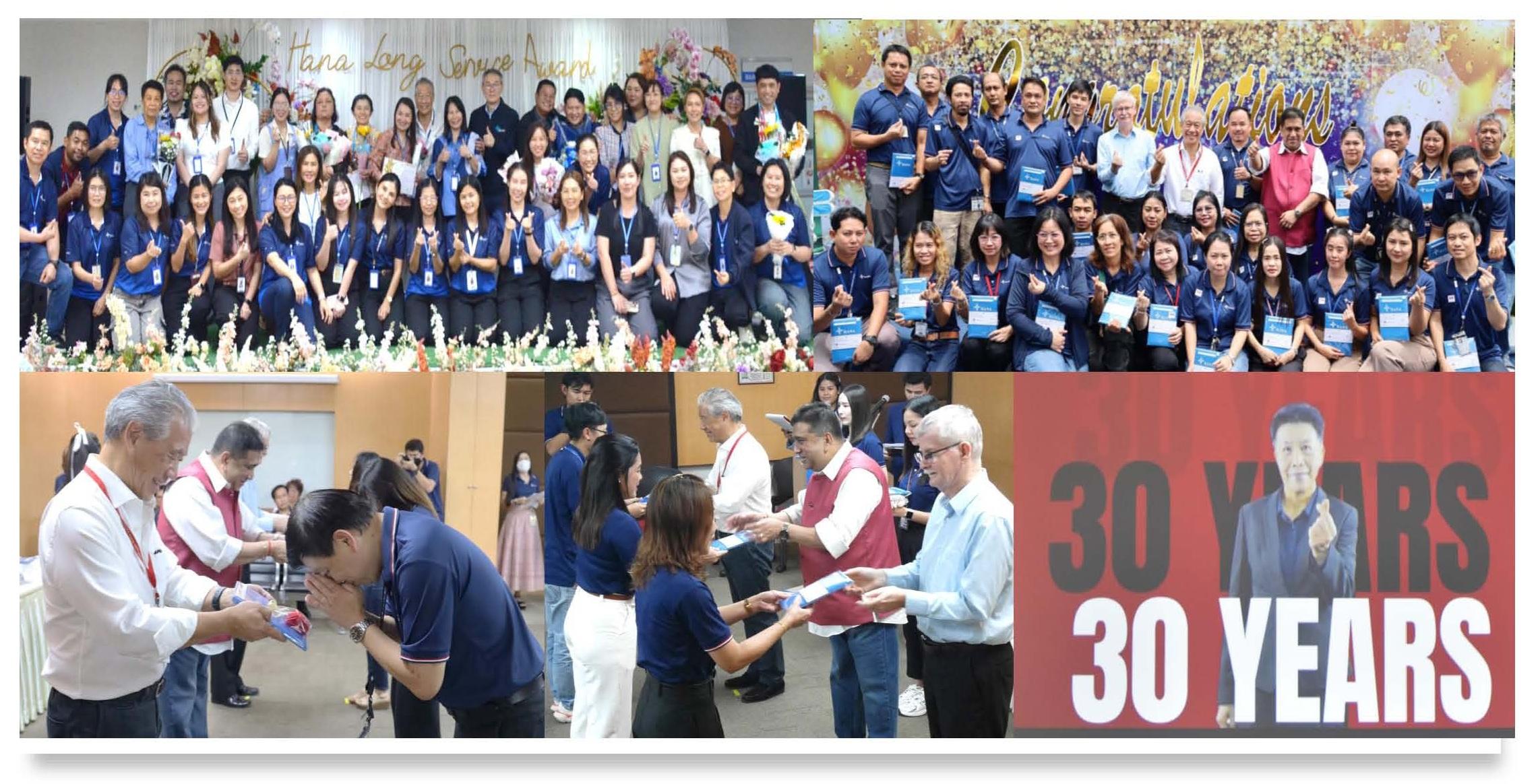
Customers — Plan & Guidelines
Has a Customer Management Plan
Yes
Plan Description
Hana places the highest value on our customers, with the long-term relationships we have built serving as a testament to this commitment. The Company aims to meet or exceed our customer expectations for product quality, delivery, reliability, and competitive prices. The Company and its subsidiaries continue to support supply chain management solutions particularly for customers, coordinating business activities and processes to minimize their total costs while maximizing their effectiveness in the marketplace.
Policy on Product and Service Development for Consumer Health and Safety
Hana is dedicated to ensuring the safety and health of customers and consumers through high-quality material sourcing and assembly processes. As an Electronics Manufacturing Services (EMS) and Outsourced Semiconductor Assembly and Test (OSAT), Hana works closely with its customers to ensure that all products meet relevant safety, quality, and regulatory standards throughout production, prioritizing the safety and well-being of end consumers.
1. Material Sourcing: Hana ensures that all materials sourced for assembly meet the required safety and quality standards. We work closely with our suppliers to ensure that all components comply with customer specifications and relevant regulations, including:
RoHS (Restriction of Hazardous Substances): Limits the use of specific hazardous materials in electrical and electronic products, aiming to reduce environmental and health risks.
REACH (Registration, Evaluation, Authorization, and Restriction of Chemicals): Regulates the safe use of chemicals within the European Union, particularly those that could harm human health or the environment.
Persistent Organic Pollutants (POPs): Refers to substances that are hazardous to human health and the environment due to their long-lasting effects. This regulation aims to eliminate or restrict their use.
PBT (Persistent, Bioaccumulative, and Toxic) under TSCA section 6(h): Addresses chemicals that are persistent, bioaccumulative, and toxic, regulating their use to protect human health and the environment.
California Proposition 65: Requires businesses to warn consumers if their products expose them to chemicals known to cause cancer or reproductive harm.
PFAS (Per- and Polyfluoroalkyl Substances): A group of chemicals that are persistent in the environment and human body, potentially posing health risks. Regulations focus on reducing exposure to these chemicals.
Conflict-free Minerals: The use of minerals that are sourced in a way that does not armed conflict or human rights abuses, particularly in regions like the Democratic Republic of the Congo (DRC) and surrounding areas in order to meet the requirements of the Responsible Business Alliance (RBA) to uphold human rights across our supply chain.
These compliances ensure that the products we assemble are safe for end consumers and comply with health, safety, and environmental protection standards.
2. Assembly Process: Although Hana does not design products, we ensure that all products are assembled according to customer specifications, which include health, safety, and environmental standards for the end consumer. We follow stringent assembly procedures and industry standards to ensure that the final product meets all relevant safety and health regulations. In addition to our core commitment to product safety, Hana is certified with the following ISO standards, which reinforce our dedication to maintaining high-quality and safe assembly processes:
ISO 9001: General Quality Management System focusing on customer satisfaction, process efficiency, and continual improvement
ISO 13485: Medical Devices Quality Management System focusing on safety, regulatory compliance, and risk management related to medical devices
IATF 16949: Automotive Quality Management System focusing on defect prevention, waste reduction, and continuous improvement in the automotive supply chain
ISO 14001: Environment Management System focusing on pollution prevention, waste reduction, energy efficiency, and compliance with regulations
ISO 45001: Occupational Health and Safety Management System focusing on risk identification, hazard control, employee well-being, and legal compliance
ISO/IEC 27001: Information Security Management System focusing on data security, risk management, access control, and compliance with regulations
3. Quality Control: Hana implements quality control measures at every stage of the assembly process, starting from the inspection of incoming materials, through final assembly, testing, and delivery to customers. This process includes detailed inspections, performance testing, and reliability monitoring to ensure that each product meets the required safety and quality standards, as well as specific customer requirements.
4. Operations and Initiatives:
Process Improvements for Safe Product Assembly: Hana continuously enhances its assembly processes by integrating Industry 4.0 technologies, lean manufacturing principles, and other improvement methodologies such as Poka Yoke, Quality Control Circles (QCC), Equipment Management Systems (EMS), Smart Manufacturing Platforms, and Kaizen. These principles help enhance productivity, reduce human errors, optimize efficiency, and ensure continuous improvement, while maintaining high standards of safety, quality, and performance.
New Product Assembly: While Hana does not design products, the Company supports the assembly of new products that may have specific safety or health considerations. This could include working with customers in the medical device, automotive, or consumer electronics industries, where safety is paramount.
5. Cybersecurity Measures: Hana takes steps to ensure data protection and cybersecurity, especially when handling sensitive customer or product data. This is particularly important for preventing unauthorized access and cyberattacks to product designs or tampering with assembly instructions that could compromise confidentiality, integrity or product safety.
Responsibility for Communicating Product and Service Information to Customers
Hana adopts a clear and transparent approach in communicating product and service information to customers. As a contract manufacturer, the Company assembles products based on customer specifications, ensuring that all relevant details, including product labels and shipment information, are provided in accordance with customer requirements.
Our Customer Service Department plays a key role in addressing customer complaints, resolving issues, and collecting valuable feedback. We work with our customers to provide problem solving solutions regarding customer complaints, listen to their recommendations, meeting their needs, and honoring our commitments. Customer partnership is a foundation of success that also requires commitment to nurture new relationships and build and foster long-term relationships by creating synergies of knowledge, security, sustainability, and adaptability for both parties.
In the case of quality complaints or product returns, Hana follows a structured process to address the issue. Our team promptly investigates the matter, identifies the underlying cause, and implements immediate corrective actions. A comprehensive review of the production process and related procedures is carried out to ensure that necessary improvements are made. Additionally, we have strengthened our inspection protocols to ensure the highest level of product quality before delivery. Customers are informed about the corrective actions taken and the rationale behind these measures.
Our dedicated customer service department ensures that we address all concerns promptly, resolve issues effectively, and maintain the highest standards of product quality and service to guarantee customer satisfaction.
Product and Customer Responsibility
Quality Assurance – Hana is accredited with ISO standards as our commitment to adhere to the industry best practice in aspects of quality management, environmental management, information security management, process improvement, regulation compliance, and continuous monitoring to maintain a high level of quality of the products and our manufacturing operations. Below is our key ISO certification.
ISO 9001 is a quality management system where the Company can demonstrate procedures to consistently provide products that meet customer, applicable statutory and regulatory requirements.
IATF 16949 is a quality management system for automotive industry which focuses on the technical production of high-quality automotive parts, defect prevention, waste reduction, and continuous improvement.
ISO 13485 is a quality management system used in the medical device industry which mostly focuses on the products’ quality and safety for the consumers and related personnel.
ISO 14001 is the environmental management system (EMS) as part of the management system used to manage environmental aspects, making businesses strive beyond environmental compliance by focusing on pollution prevention, waste reduction, energy efficiency and environmental preservation.
ISO 45001 is an occupational health and safety management system emphasizing the importance of preventing accidents and occupational diseases to reduce the risk in the workplace, hazard control and create safe working environment for employees and those who are involved.
ISO/IEC 27001 is an international standard to manage information security and access control emphasizing requirements for establishing, implementing, maintaining, and continually improving information security management systems.
Responsible Sourcing – The Company’s product is manufactured to meet all applicable standards and the customers’ specification and requirements. Hana established the responsible sourcing of raw materials policy to ensure procurement of material not containing Conflict Minerals (Tin, Tantalum, Tungsten, Gold, Cobalt, Mica and other relevant minerals) contributing to abuses of human rights in Democratic Republic of Congo and adjoining countries and being consistently followed the guidelines of relevant regulations. Hana also requires our suppliers not to supply aforesaid minerals acquired from these conflict areas by collaboration with the customers and suppliers to identify their sources of origin in compliance with the requirements throughout the supply chain as well as communicating our Conflict Minerals Policy on the principle of the Responsible Minerals Initiative (RMI)/Conflict Minerals.
Quality Improvement and Innovation Development - Hana is committed to sustainable growth in recognizing the importance of the “quality” of our products supplied and services rendered as to meet customer expectations and satisfactions as well as end- consumer product safety by ensuring the quality put in place throughout the value chain starting from raw material procurement, production process until delivery and after-sales service. By integrating people’s development and continuous improvement, the Company continues its efforts towards Continuous Improvement Program (CIP) as a fundamental framework to achieve improvements of processes and product quality. Quality Control Circle (QCC) by small group activity is a systematic and step-by-step process for solving problems whereby creating an effective incentive program for employees. Poka-Yoke measurement system is also implemented and developed both in mechanics and software to eliminate all human dependent factors and to get high quality and reliability. In addition, the Kaizen principle has been implemented to continuously develop and improve their own work processes efficiency. This is a clear policy and concrete support from the management that results in the success of Hana. Our quality improvement programs have been continuously developed and recognized by both internal and external organizations. Hana also places importance on corporate innovation development to increase competitiveness in business including with expansion of creativity and innovation towards sustainable growth.
Customer Relationship Management - Customer satisfaction surveys are conducted annually to improve the Company’s products, services and other business processes in order to meet or exceed the customers’ needs and requirements enabling the Company to maintain and expand its customer base in the long term. Our guiding principle to our customers is to operate our business in compliance with applicable laws, rules and regulations as well as compliance with Responsible Business Alliance (RBA), which is the code of conduct for electronic industry’s best practices.
Plan Areas
| Plan Area |
|---|
| Responsible production and services for customers |
| Communication of product and service impacts to customers/consumers |
| Development of customer satisfaction and customer relationship |
| Protection of customer personal information |
Customers — Satisfaction Results
Customer Satisfaction Results
| Metric | Current Year | Previous Year | Two Years Ago |
|---|---|---|---|
| Evaluation results of customer satisfaction | 1 | 1 | 1 |
Customers — Targets
Introduction
Customer satisfaction: Target 85%
Has Set Customer Targets
Yes
Targets
| Indicator | Target Areas | Base Year | Base Year — Description | Target Year | Target Year — Description |
|---|---|---|---|---|---|
| Customer Satisfaction | 3009 · Description: Development of customer satisfaction and customer relationship | 2,025 | Target: 85% | 2,025 | Actual Performance: 91% |
Customers — Performance & Outcomes
Has Performance Results
Yes
Performance Description
Achievement of Quality Control and Innovation Development Project Implementation
Customer Recognition: Regarding our responsibility for our products and customers, we are committed to developing, improving and being ultimately responsible for the highest standard of product quality and safety to enhance customer satisfaction and trust as to robustly grow further as a reliable partner along with our customers’ journey. Hana never stops innovating to improve production processes to serve the customers beyond their expectation, enhancing the utmost satisfaction.
In 2025, Hana Lamphun successfully received awards from leading global customers in its core industries, including the “Engineering Test and Measurement” and “Lighting” sectors. The awards recognized “Excellence in Process Improvement” and “Innovation Development”.
These recognitions reflect the Company’s continuous advancement in manufacturing engineering, alongside the effective application of innovation and technology to enhance production efficiency. This has contributed to improved product quality, reduced defect rates, and minimized operational risks. The achievement underscores Hana’s commitment to consistently meeting customer expectations, maintaining high quality standards, and strengthening its long-term competitiveness.
Employee Engagement and Achievements in Quality Improvement at Hana Lamphun - Our employees participated in group activities for Thailand Quality Prize and Thailand Kaizen Award organized by Technology Promotion Association (Thailand-Japan) whereby Hana Microelectronics Public Co., Ltd. have been received 123 awards since 2009 to 2025 with long journey of striving for organization of excellence, efficiency, sustainable growth and quality administration.
In 2025, the Company received totally 9 prizes consisting of 2 Diamond Prizes and 2 Golden Awards of Thailand Quality Prize Award (QCC); and 1 Diamond and 4 Golden Awards for Thailand Kaizen Award (Kaizen). Those are the performance of small groups of staff working together to contribute to the improvement of production processes aiming for waste reduction or zero-defect enabling cost reduction to the Company more than 102 million Baht per year. The group activity program leads to employees’ involvement and participation at all levels working toward common goals for continuous quality improvement as an approach to identify, investigate, analyze and solve their work-related problems so enhance productivity and quality while achieving customer satisfaction. CIP program is also a tool to increase the morale of employees, promote human relations, reduce accidents at work, improve two-way communication with the management and encourage both employees and management at all levels to focus on continuous improvement of our manufacturing processes.
Customer Relationship Management - Customer satisfaction surveys are conducted annually. The survey results, compared with the KPI for 2025 and the previous year, are detailed as follows:
Customer Satisfaction Survey | 2025 | 2024 | 2023 |
KPI | 85 | 85 | 80 |
Result | 91 | 91 | 89 |
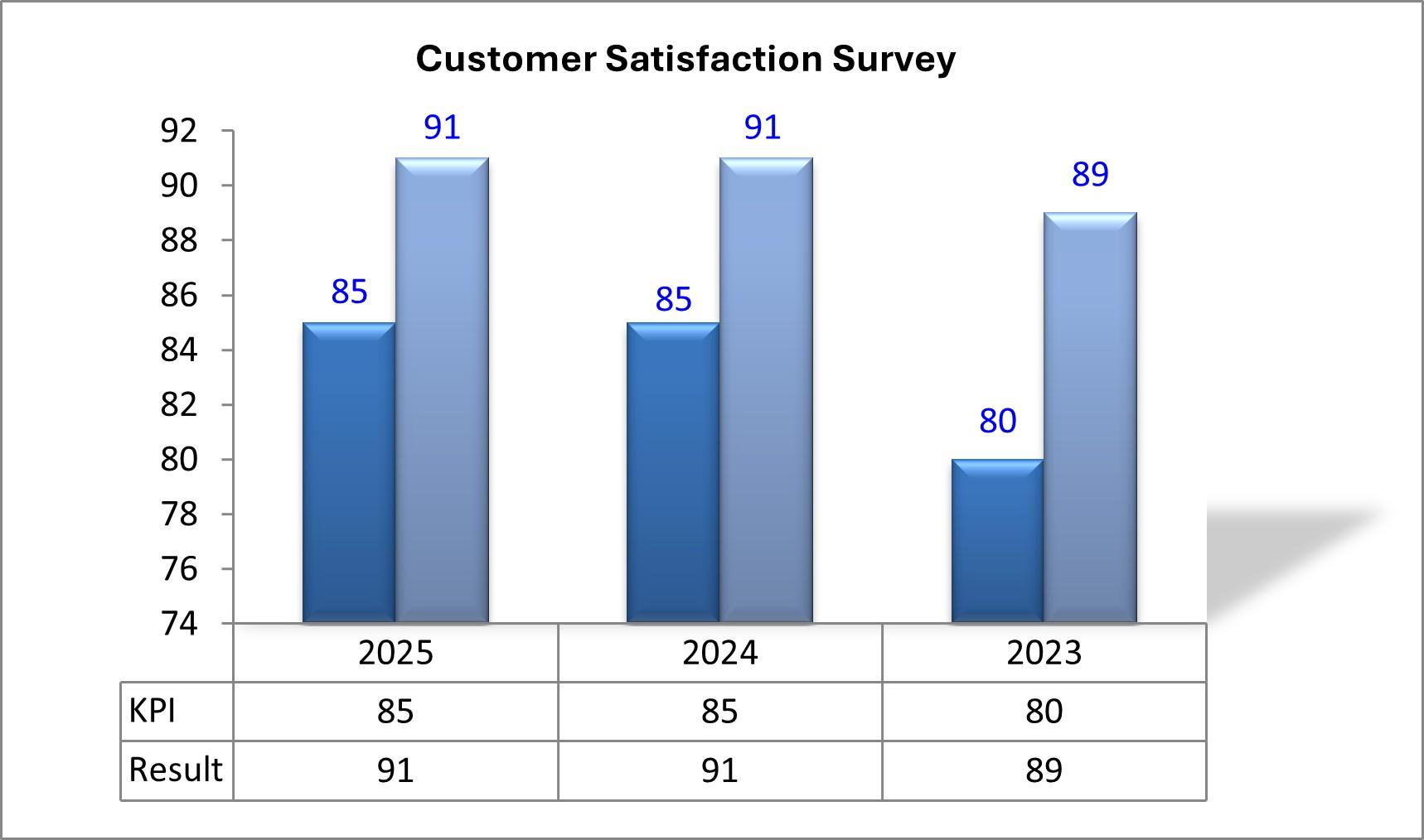
The results of the customer satisfaction survey are evaluated so we can provide further improvement on the key items our customers find important. The continuous improvement metrics we use to increase our customer satisfaction are as follows.
Quality Excellence & Capability Upgrades through Hana 4.0 Strategy: To maintain our core direction while strengthening execution Hana 4.0 discipline, automation depth, and process continuity across all teams.
1. Smart Manufacturing Lines
Upgrade to fully integrated Smart Lines with real-time monitoring and traceability
Improve line stability, yield performance, and response time through predictive controls
Reduce variability and ensure consistent, high-reliability output
2. Process Excellence & Automation
Expand automation in critical and high-risk processes to minimize human variation
Standardize best practices across front-end and back-end operations
Drive faster problem containment and structured root cause elimination
3. AI-Driven Quality Systems
Strengthen AI-based AOI and inspection systems for early defect detection
Enhance closed-loop feedback between inspection, engineering, and production
Improve outgoing quality performance and customer confidence
4. Data-Driven Continuous Improvement
Leverage real-time analytics for proactive risk management
Institutionalize structured follow-up to prevent recurrence
Expand Continuous Improvement (CIP) ownership across all functions
5. Sustained Technology Investment
Continue strategic CAPEX to support scalability, flexibility, and advanced capability
Ensure readiness for customers’ future technology roadmap
Supply Chain Strengthening & Service Excellence: To further elevate customer confidence and delivery reliability, we will maintain our established supply chain strategy while strengthening execution rigor, integration, and responsiveness across all functions.
1. Local & Resilient Supply Network
Deepen local supplier partnerships and expand qualified vendor base
Reinforce dual-sourcing strategy for critical components to mitigate risk
Enhance supply continuity aligned with geopolitical risk mitigation
2. Smart Inventory & Visibility
Strengthen Warehouse Management System (WMS) through smart store project
Improve demand-supply synchronization to reduce stock-outs and excess inventory
Enhance forecasting discipline and cross-functional planning alignment
3. Strategic Procurement & Scale Leverage
Further integrate centralized purchasing to maximize economies of scale
Standardize procurement processes for speed, cost competitiveness, and transparency
Improve supplier performance monitoring and cost management discipline
4. Drive New Business Development through Cost Leadership
Improve cost competitiveness through, local supply chain, design-to-cost collaboration
Accelerate NPI readiness and ramp-up capability to shorten time-to-market
Build scalable capacity roadmap aligned with high-growth segments and strategic accounts
Sustainability & Compliance Initiatives: To strengthen established sustainability framework by enhancing compliance discipline, environmental performance, and long-term workforce responsibility.
1. Regulatory Compliance & Responsible Sourcing
Reinforce RoHS & REACH compliance through stricter supplier audits and materialtransparency
Strengthen environmental management systems aligned with ISO 14001 andglobal standards
2. Resource Efficiency & Emission Reduction
Drive zero-waste initiatives through material optimization, recycling, and closed-loop practices
Expand renewable energy adoption and energy-efficient equipment to reduce emissions and operational footprint
3. Carbon Transparency & Customer Alignment
Provide structured carbon footprint reporting to support customers’ ESG targets
Collaborate on decarbonization roadmap and sustainable manufacturing initiatives
4. Workforce & Community Sustainability
Invest in employee well-being, skills development, and future engineering talent
Strengthen community engagement to support long-term social responsibility
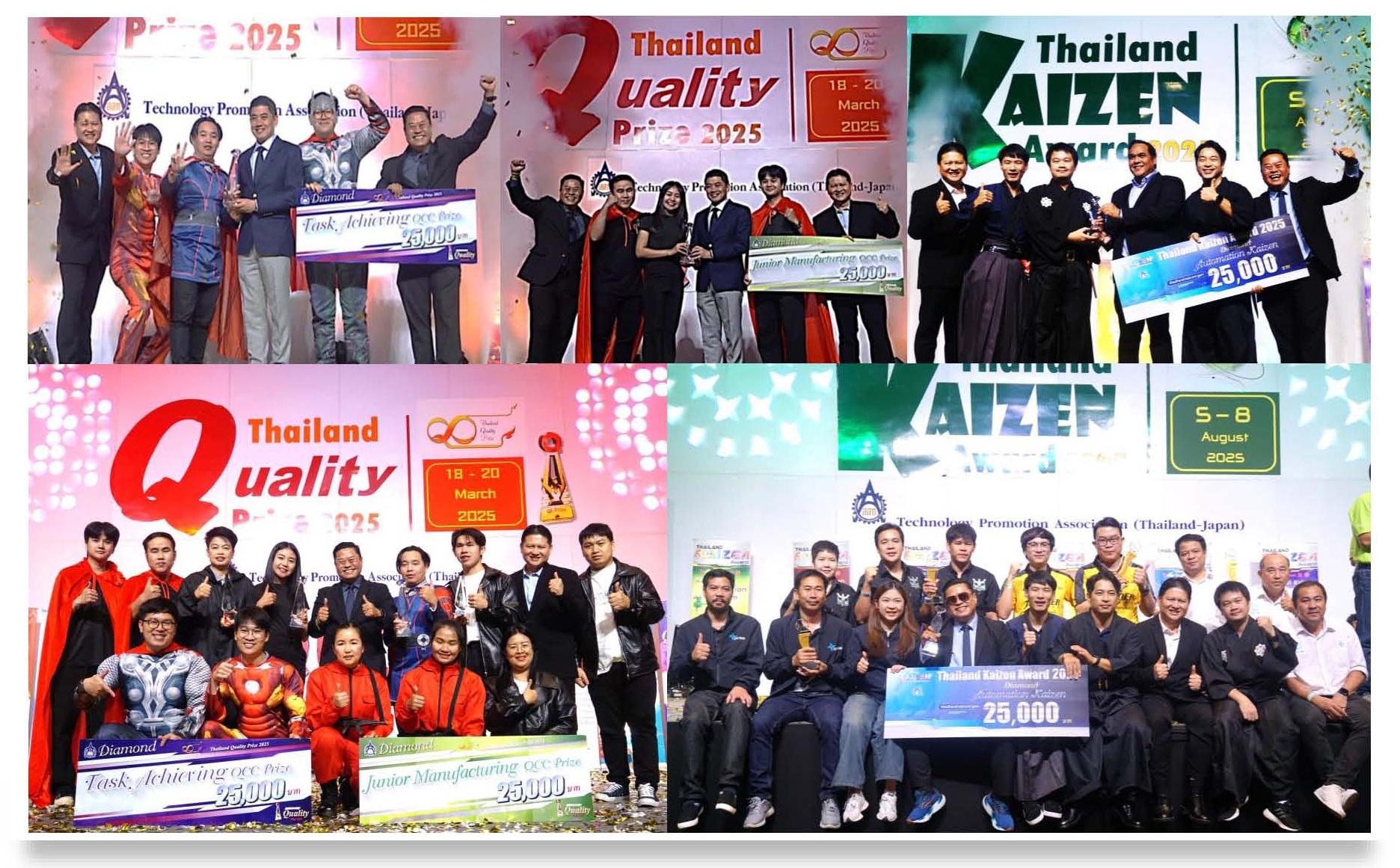
Community & Social — Plan & Guidelines
Has a Community & Social Plan
Yes
Plan Description
The Company encourages employees at all levels to actively participate in community and social initiatives, fostering a strong spirit of volunteerism and reinforcing the importance of caring for both the internal and external environment to enhance better quality of life through social contributions.
Our sustainable development strategies emphasize self-reliance as a key approach to effective social and community development. Through our community investment focus, we prioritize initiatives that enhance educational opportunities, support career development, improve the quality of life for vulnerable groups, and promote the protection of natural resources and the environment. By empowering employees to engage in volunteer programs and community partnerships, we cultivate a culture of shared responsibility and positive social impact.
Aligned with our business strategy, these efforts strengthen local talent, support sustainable resource management, and foster resilient communities—creating long-term social value while reinforcing the Company’s sustainable growth.
Plan Areas
| Plan Area |
|---|
| Employment and professional skill development |
| Education |
Community & Social — Targets
Introduction
Support quality education, career advancement, and better quality of life for both internal and external stakeholders including persons with disabilities and underprivileged: Target 10,000 people per year
Has Set Community & Social Targets
Yes
Targets
| Indicator | Target Areas | Base Year | Base Year — Description | Target Year | Target Year — Description |
|---|---|---|---|---|---|
| Support quality education, career advancement, and better quality of life for both internal and external stakeholders including persons with disabilities and underprivileged | 3036 · Description: Employment and professional skill development · 3037 · Description: Education | 2,025 | Target 10,000 people per year | 2,025 | Actual Performance: 50,859 people |
Community & Social — Performance & Outcomes
Has Performance Results
Yes
Performance Description
In 2025, the Company encourages employees to participate in activities to support community and social development participation. The Company has set goals to support society and community development by promoting quality education, career advancement, and an improved quality of life for both internal and external stakeholders, including individuals with disabilities and those from underprivileged backgrounds. The target and execution results are as follows:
Target: 10,000 people
Actual Performance: 50,859 people
The Company has conducted various projects and activities for social and community development in the following areas:
Promotion of Knowledge and Education:
Knowledge Sharing and Community Engagement Program - Hana continues to promote employee engagement in knowledge sharing with society, communities, and industry partners. In 2025, initiatives were implemented to support education, enhance local business capabilities, and strengthen regional supply chains, as follows:
Hana Lamphun – The General Manager was invited as a keynote speaker at Lamphun Tech Week 2025, where he shared strategic perspectives on the Hana 4.0 transformation, including key technology trends shaping the electronics industry and their implications for business adaptation, competitiveness, and future industry development.
Hana Lamphun – Purchasing and Procurement representative organized training on quality management systems and Hana 4.0 for 24 companies within Lamphun’s industrial network, with a total of 36 participants, focusing on Material Localization to enhance competitiveness and promote sustainable development, under the “Large Enterprise and SME Development and Networking Project.”
Hana Ayutthaya – Human Resources representatives conducted the program “Preparing for the Workforce After Graduation” for over 2,500 students from five universities, covering business operations, corporate culture, engineering roles, and job application skills. The program also provided practical insights into workplace expectations and career readiness, while strengthening collaboration with academic institutions and enhancing the Company’s visibility among prospective future talents.
These initiatives reflect the Company’s commitment to knowledge sharing, capacity building, and the sustainable development of local communities and industry.
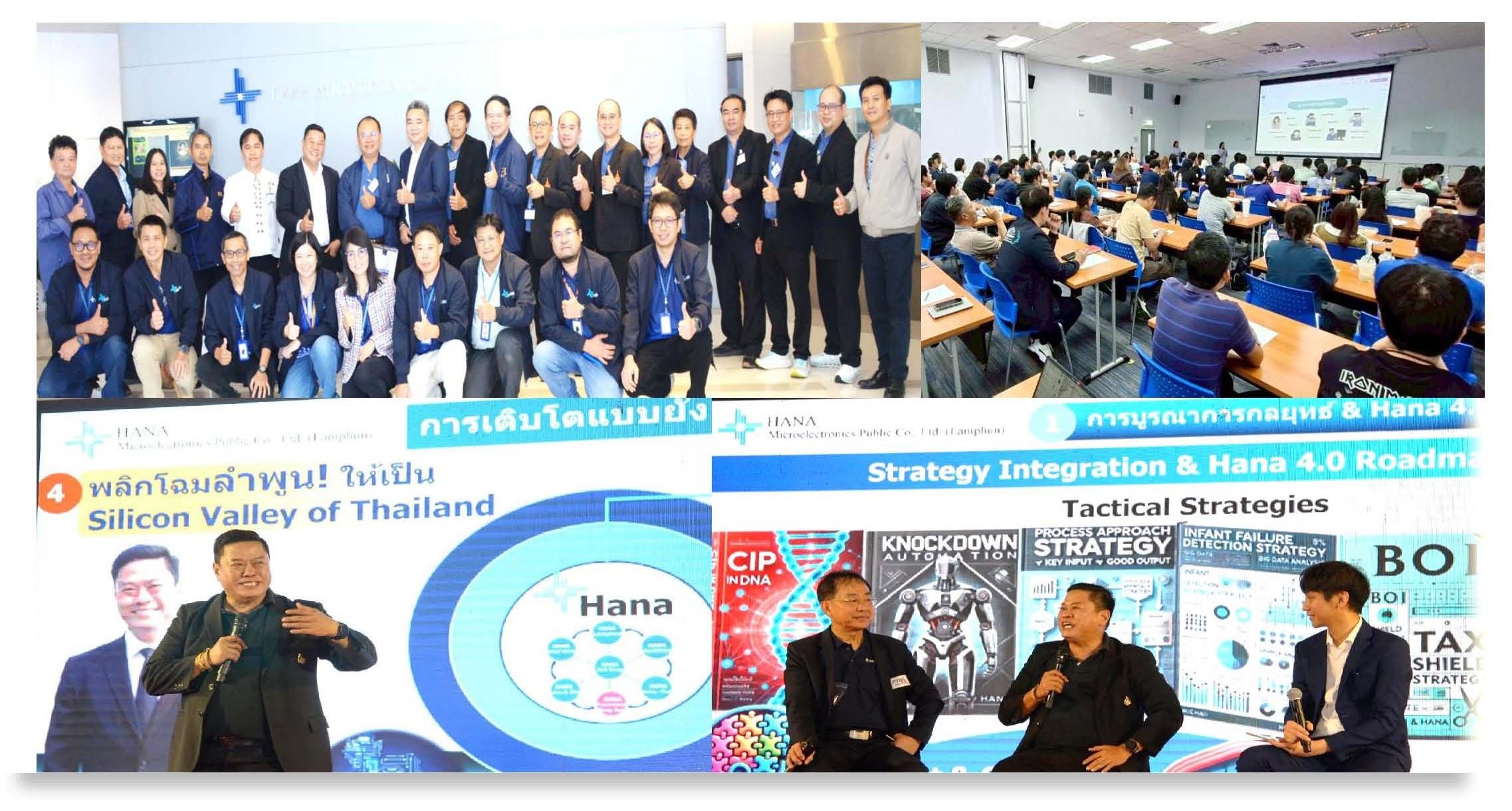
Internship Program – Hana recognizes the importance of education, career readiness, and creating pathways to employment for young people. As part of our commitment to supporting youth employment initiatives, we provide internship opportunities to college and undergraduate students, enabling them to apply academic knowledge in a practical work environment and develop essential workplace skills. The program offers practical work experience, skills development, and exposure to real business operations, supporting students’ transition from education to the workforce and enhancing their employability. In 2025, Hana Lamphun and Hana Ayutthaya provided a total of 55 internship placements, contributing to the development of a skilled local talent pipeline, which brings benefits to both students and the organization as follows:
Value Added from the Internship Program – In 2025, Hana Lamphun’s internship program has initiated one work development project, as follows:
Development of an Automatic Workpiece Testing Machine – This project aimed to enhance the accuracy and efficiency of workpiece testing in the production process through the application of automation, innovative technology, and control systems. Interns studied the existing process and identified key issues, then designed improvements and participated in the development and assembly of an automatic workpiece testing machine. They also helped implement a system to track testing results, standardizing the process, reducing redundant steps, and increasing the speed of testing and transferring workpieces along the production line.
While Hana Ayutthaya interns initiated and implemented a total of six work improvement projects. Key projects included the following:
Yield Improvement: Reducing Epoxy Fillet Height Over Specification – This practical study addressed issues in the production line where the epoxy fillet height exceeded specifications, resulting in a significant reduction in product yield. Through experimentation and analysis, the interns developed a set of machine parameter adjustments that kept the epoxy height within specifications, effectively reducing product defects and improving overall yield.
Converting Encapsulation Process from Casting to Transfer for a Specific Customer – This project involved an applied study to collect data and evaluate a process change in injection molding operations, converting from the existing casting method to a transfer molding process for a specific customer. Using engineering study methods, the interns provided reliable data to support the customer’s investment decision in process modification. The result increased the good product yield from 77% to 95%, reduced rework, and shortened production cycle times per lot.
Extending the Tool Life of Machine Parts in the Trim & Form Process – This project focused on analyzing and determining optimal usage lifetimes for machine components in the trim and form process. By applying engineering study methodologies, the interns identified ways to extend machine capability without damaging products. The initiative increased production capacity while reducing costs for spare machine parts by up to 30% compared to the same period in 2024.
Packing Material Control System – This project involved a study and feasibility analysis to prevent errors caused by employee oversight during material issuance for packaging. The interns proposed a computer-based system to control the quantity of materials used and reduce mistakes in packing processes.
Market Research & Analysis for Power Products – This project conducted business and market research to identify strategic opportunities for market development in energy-related products. The analysis provided the Company with actionable insights for negotiating production capacity and pricing with customers.
Improvement of Handler and IoT SCADA System – This practical study focused on enhancing the performance and capability of the handling equipment by integrating IoT technology with the SCADA system. The project is currently ongoing and is scheduled for completion in March 2026, within the 11-month internship and cooperative education program timeframe.
The Company’s internship program provides students with opportunities to develop technical skills, engineering problem-solving abilities, process design and improvement expertise, as well as communication, time management, and presentation skills, preparing them for the workforce. At the same time, the Company benefits from the support of a new generation of talent in implementing production process improvements, enhancing operational efficiency, and applying automation technologies in line with organizational strategies.
The program also strengthens collaboration with educational institutions and reinforces the Company’s reputation for workforce development. These initiatives encourage systematic thinking, hands-on practice, and effective data analysis, aligning with national efforts to develop human capital in the electronics industry—a key sector driving Thailand’s economic growth.
Career Advancement
The Company promotes social engagement and development with the strategy aiming the communities to be self-reliant in a sustainable manner as follows.
“Occupational Promotion for Persons with Disabilities under Act Section 35” Project – The Company implemented this initiative as part of its commitment to social responsibility and inclusive growth, aiming to promote equitable employment opportunities for underprivileged groups, particularly persons with disabilities. This initiative aligns with the Company’s ESG strategy in the Social dimension, focusing on community development, reducing social inequality, and strengthening communities in the long term. It seeks to enable vulnerable groups to become self-reliant, earn stable incomes, and achieve a sustainably improved quality of life.
Under this project, the Company provides financial support, resources, and capacity-building to empower persons with disabilities to pursue sustainable livelihoods. In the past year, the Company supported chicken farming and cattle raising initiatives in Ban Hong and Mae Tha Districts of Lamphun Province. The project has benefited 8 participants (2 families) and is expected to generate approximately 240,000 Baht in annual income.
“Smart Farm for Sustainable Community” Project – In 2025, the Company implemented the “Smart Farm for Sustainable Community” project in collaboration with Pa Tan Ban Thi Pittaya School and nearby communities in Ban Thi District, Lamphun Province. The project established a smart vegetable farming learning center, where knowledge on solar energy innovations and automation systems is transferred to enhance agricultural productivity within the community. The learning center also serves as a source of school lunches, promoting food security while utilizing clean solar energy to support energy sustainability. In addition, the initiative functions as a hub for vocational skill development, creating opportunities for employment and increasing community income. The project is expected to benefit approximately 9,733 people and generate around 100,000 Baht in annual income for the community. Overall, this project reflects the Company’s commitment to creating sustainable economic, social, and environmental value.
“Hana Smart Vegetable Farm for Sustainable Communities” Project - The Company, in collaboration with Lamphun College of Agriculture and Technology and the community in Mae Tha District, Lamphun Province, established a Smart Vegetable Farm Learning Center within the college. The center serves as a learning hub for students and the surrounding community, focusing on knowledge transfer in agricultural innovation, particularly the application of solar energy and automation systems to enhance agricultural productivity while promoting food security. The project can support the college’s lunch and advance energy sustainability with renewable energy. The Company provided automated water systems, water tanks, and pumps for five greenhouses and conducted practical training on automated water system installation to build vocational skills and create opportunities for supplementary income for students and the community. The knowledge gained can be continuously applied and expanded.
The project is expected to benefit approximately 10,851 individuals and generate an estimated 80,000 Baht in annual income. This initiative demonstrates the Company’s commitment to sustainable community development across economic, social, and environmental dimensions.
Promoting Quality of Life and Well-Being Community
Financial Support for Hospitals - The Company provided financial support for the purchase of medical equipment and enhance healthcare capabilities at Lamphun Hospital, Lamphun Province, and San Sai Hospital, Chiang Mai Province. Through this initiative, the Company supports the improvement of medical services and ensures that vulnerable patients have greater access to essential healthcare, contributing to community well-being.
Blood, Organ, and Body Donation Activities – The Company actively encourages employees to contribute to society. Employees from Hana Ayutthaya and Hana Lamphun have continuously participated in blood, organ, and body donation activities in collaboration with the Thai Red Cross Society to support patients and strengthen public healthcare. In 2025, a total of 1,087 employees participated in blood donation, contributing 1,087 units of blood. In addition, 48 employees pledged to donate their eyes, 48 employees registered for organ donation, and 18 employees pledged to donate their bodies. These efforts clearly reflect the strong sense of social responsibility demonstrated by both employees and the organization.
Community Development Volunteer Program - Hana Lamphun actively promotes employee participation in sustainable social development through its community volunteer initiative. The program delivers a wide range of activities aimed at improving the quality of life in surrounding communities. Key activities include repairing educational equipment and installing water filtration systems for remote communities in Mae Taeng District, Chiang Mai. The Company also upgraded solar energy systems by replacing damaged solar control units and batteries. In addition, public information boards were developed, and health education sessions were conducted for students at Lamphun Agricultural and Technology College and nearby communities. These sessions covered topics such as influenza prevention and control, heart disease, colorectal cancer, HIV/AIDS, and contraception. Furthermore, the Company supported the renovation of restroom facilities at Wat Nong Lom School in Mueang District, Lamphun Province, and donated essential supplies, drinking water, and daily necessities to flood-affected communities in southern Thailand. These initiatives reflect the Company’s ongoing commitment to creating sustainable value for society and local communities.
Promoting Environmental Conservation
SET Environmental Conservation Project - The Company seeks to contribute to improving the quality of life and reduce inequities for the underprivileged in society. Mr. Terrence Philip Weir, an executive director, made the cash donation and 890 old desk calendars which were donated by employees from Hana HQ, Lamphun and Ayutthaya, to the Education Technology for the Blind Center, Foundation for the Blind in Thailand under the Royal Patronage of Her Majesty the Queen. For those old desk calendars, the Foundation will use them to produce Braille word cards as well as educational materials for students at the Bangkok Blind School. This project is one of the projects that help reduce waste in the organization with the principles of 3Rs - Reduce, Reuse, Recycle, in line with the Stock Exchange of Thailand environmental project.
SAY NO TO FOAM & NO PLASTIC PROGRAM - The Company joined the government sector in signing a Memorandum of Understanding Ceremony for reducing or banning foam food. The Company has further enhanced the project “HANA NO PLASTIC PROGRAM” along with awareness raising and communication campaign including training provided to all employees to reduce plastic consumption such as plastic cups, plastic bags and switch to use reusable cups/bags/bottles to promote a healthy and safe environment.
General Waste Management Project - The Company promotes waste and energy reduction to increase green spaces and reduce greenhouse gas emissions by raising awareness to employees to realize the environment is not far away and is a matter for everyone. All must take care of the globe for sustainability. Throughout 2025, we have enhanced the process of bringing waste to recycle disposal and other non-recyclable materials turn into fuel.
Sustainable Waste Management Project – The Company encourages employees to participate in sustainable waste management to address the issue of leftover packaging materials from the production process that cannot be reused or recycled. Previously, these materials were delivered for landfill disposal in Saraburi Province, resulting in high costs for transportation, disposal, labor, and contributing to environmental pollution. Employees then analyzed the problem and developed an improvement plan by designing a high-quality packaging waste compactor, enabling environmentally friendly waste disposal. As a result, the Company reduced costs by 46% compared to pre-improvement levels and was able to repurpose waste as fuel and cement components. This approach reduces landfill emissions, minimizes community impact, lowers CO2 emissions from transportation, and moves the Company closer to its goal of achieving zero landfill waste.
Forest Fire Prevention Initiative – Hana Lamphun, in collaboration with the Lamphun Provincial Industrial Estate Office, organized a volunteer activity to benefit society, the community, and the environment by creating firebreaks around Mae Tip Reservoir, Makuea Chae Subdistrict, Mueang District, Lamphun Province. The initiative aimed to prevent and reduce the risk of forest fires, with approximately 13,850 beneficiaries expected to benefit from this initiative.
Natural Weir Construction and Reforestation with the Community – Hana Lamphun worked with the Lamphun Provincial Industrial Estate Office and Thung Yao community to plant trees and construct water retention weirs following the royal initiative along Mae Tip Reservoir (Makuea Chae Subdistrict) and Thung Yao Community Forest (Sri Bua Ban Subdistrict), Mueang District, Lamphun Province. This project aims to restore natural resources and improve ecosystem moisture, with approximately 14,941 beneficiaries expected to benefit from this project.
Clean-up Canal Activity - Hana Lamphun supported the provision of drinking water for a river dredging activity along the Kuang River, Sri Bun Yuen Subdistrict, Mueang District, Lamphun Province, in collaboration with the Lamphun Provincial Industrial Estate Office, to mitigate flooding in surrounding communities, with approximately 1,421 individuals expected to benefit from this activity.
In summary, the Company contributed a total of 862,700 Baht in donations and community investments to registered not-for-profit organizations in 2025, supporting projects in career advancement, the enhancement of quality of life and community well-being, as well as environmental conservation.
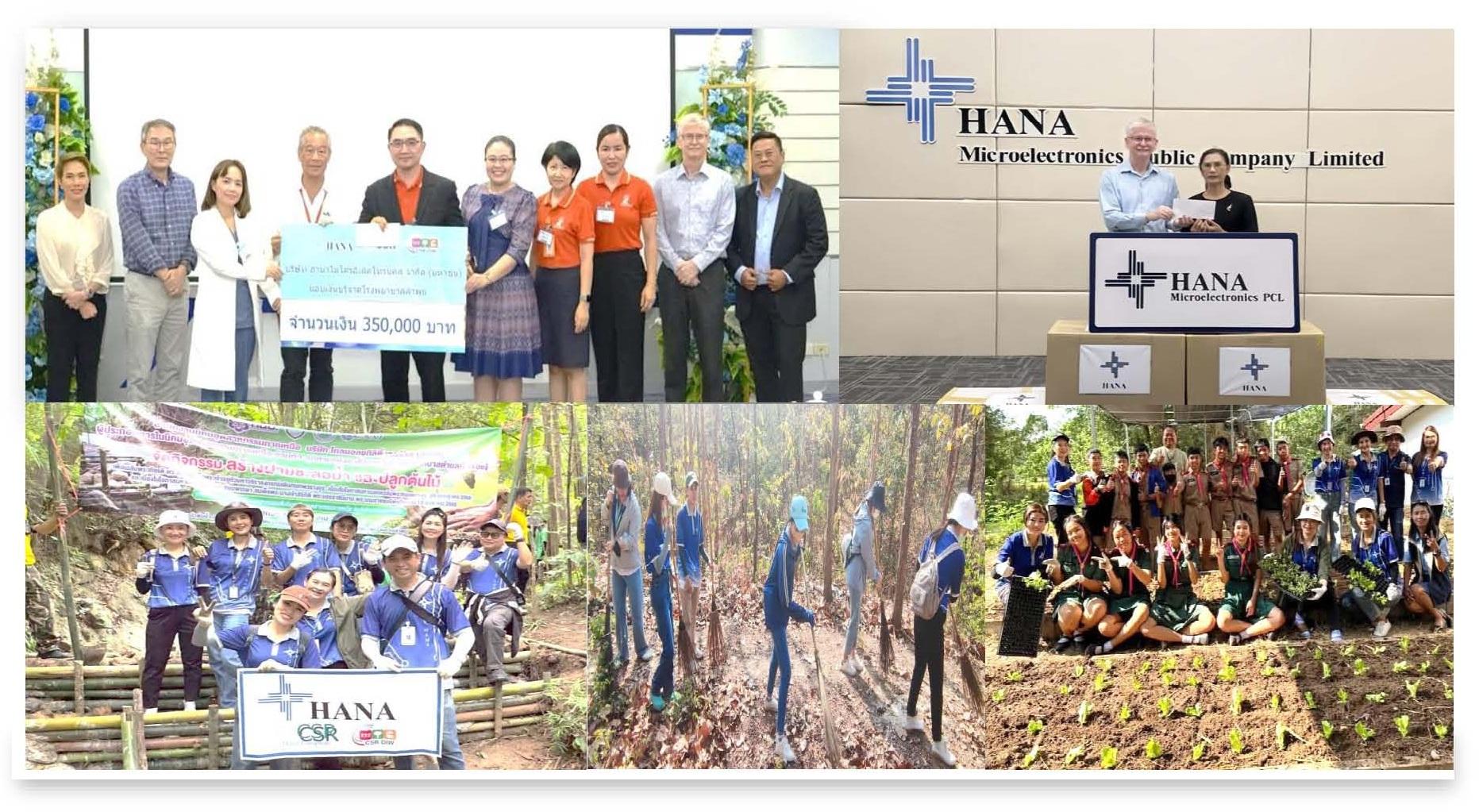
Community and Social Management and SDGs Alignment:
Hana’s community and social management focuses on enhancing quality of life, promoting education and career development, and supporting sustainable livelihoods for local communities. These initiatives are aligned with the United Nations Sustainable Development Goals (SDGs), with a focus on the following core and supporting goals:
Core SDGs
SDG 4: Quality Education
The Company promotes education through internships, vocational training, and knowledge-sharing programs to enhance skills and prepare individuals for the workforce.SDG 8: Decent Work and Economic Growth
Hana supports career development and employment opportunities for students, communities, and vulnerable groups, contributing to inclusive and sustainable economic growth.SDG 10: Reduced Inequalities
The Company promotes inclusive access to education, employment, and career development, particularly for disadvantaged groups, including persons with disabilities.
Supporting SDGs
SDG 1: No Poverty
The Company supports income generation through community initiatives such as the Smart Farm project, which helps households develop sustainable income and improve economic resilience.
SDG 2: Zero Hunger
Through agricultural development initiatives, Hana supports local food production, enhances food security, and promotes community self-sufficiency.
SDG 3: Good Health and Well-being
The Company supports community well-being through activities aimed at improving the quality of life of surrounding communities.
SDG 11: Sustainable Cities and Communities
Through community development projects, employee volunteer programs, and partnerships with local stakeholders, Hana contributes to improving quality of life and strengthening community resilience.
Summary Awards of ESG Performances and Achievements in 2025
2025 Corporate Governance Report Rating (CGR) – Hana achieved “Excellent” in Corporate Governance Rating (CGR) or 5-star corporate governance assessment in 2025 honored by the Thai Institute of Directors Association (IOD) for the twelfth consecutive years, reaffirming Hana’s continuous development of good corporate governance to steer the organization towards sustainable growth and enhance investor confidence.
ASEAN Corporate Governance Scorecard (ACGS) – Hana has consistently been recognized in the ASEAN Corporate Governance Scorecard (ACGS) evaluation at the ASEAN Asset Class PLCs level, an award given to listed companies achieving a score of 97.5 or higher. This prestigious recognition is supported by the ASEAN Capital Markets Forum (ACMF) and the Asian Development Bank (ADB), reflecting Hana’s excellence in effective and transparent corporate governance and its commitment to elevating governance standards to drive sustainable growth in the region.
2025 SET ESG Ratings – Hana received the highest-level “AAA” rating in the 2025 SET ESG Ratings by the Stock Exchange of Thailand (SET). This rating reflects the Company’s strong commitment to sustainable business practices, environmental responsibility, social accountability, and sound corporate governance.
2025 AGM Checklist Rating - Hana achieved a perfect 100 score for the fifth consecutive years in the Annual General Meeting Assessment (AGM Checklist) in 2025, assessed by the Thai Investors Association and the Federation of Thai Capital Market Organizations.
2025 Sustainability Disclosure Acknowledgement - Hana was honoured with the Sustainability Disclosure Acknowledgement 2025 from the Thaipat Institute, marking the fifth consecutive years of recognition. This award reflects the Company’s strong commitment to transparent ESG disclosure, providing valuable information to stakeholders and supporting the achievement of Sustainable Development Goal (SDG) 12.6 on corporate sustainability reporting.
Eco-World Class Recognition – Hana Lamphun was awarded a certificate as a “Workplace Supporting the Development of Eco-Industrial Cities at the Eco-World Class Level” by the Ministry of Industry. The recognition highlights the Company’s efforts in energy management according to green building standards and energy conservation practices within its facilities, demonstrating an environmentally friendly approach to its operations.
Low Emission Support Scheme (LESS) – Hana Lamphun received a certificate of recognition under the Low Emission Support Scheme (LESS) from the Thailand Greenhouse Gas Management Organization (Public Organization), Ministry of Natural Resources and Environment. This program raises awareness of greenhouse gas reduction by combining technical and scientific analysis with a “giver-to-receiver” approach, where support from organizations and businesses is directed toward communities and society to promote sustainable environmental impact.
CSR-DIW Continuous Award – Hana Lamphun received the “CSR-DIW Continuous Award” from the Department of Industrial Works for the ninth consecutive years, recognizing its commitment to corporate social responsibility and sustainable development through the application of CSR-DIW standards across various dimensions of social responsibility.
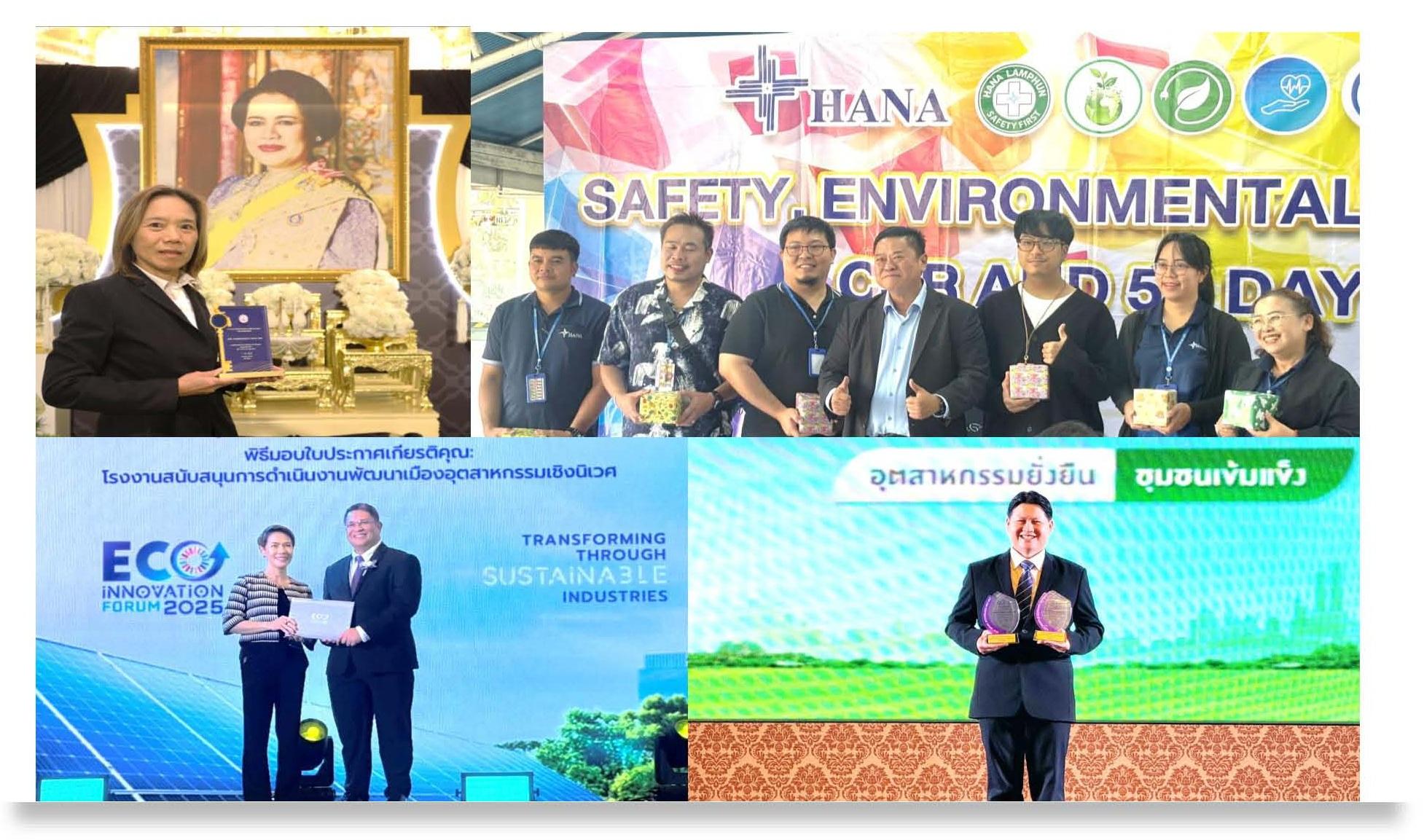
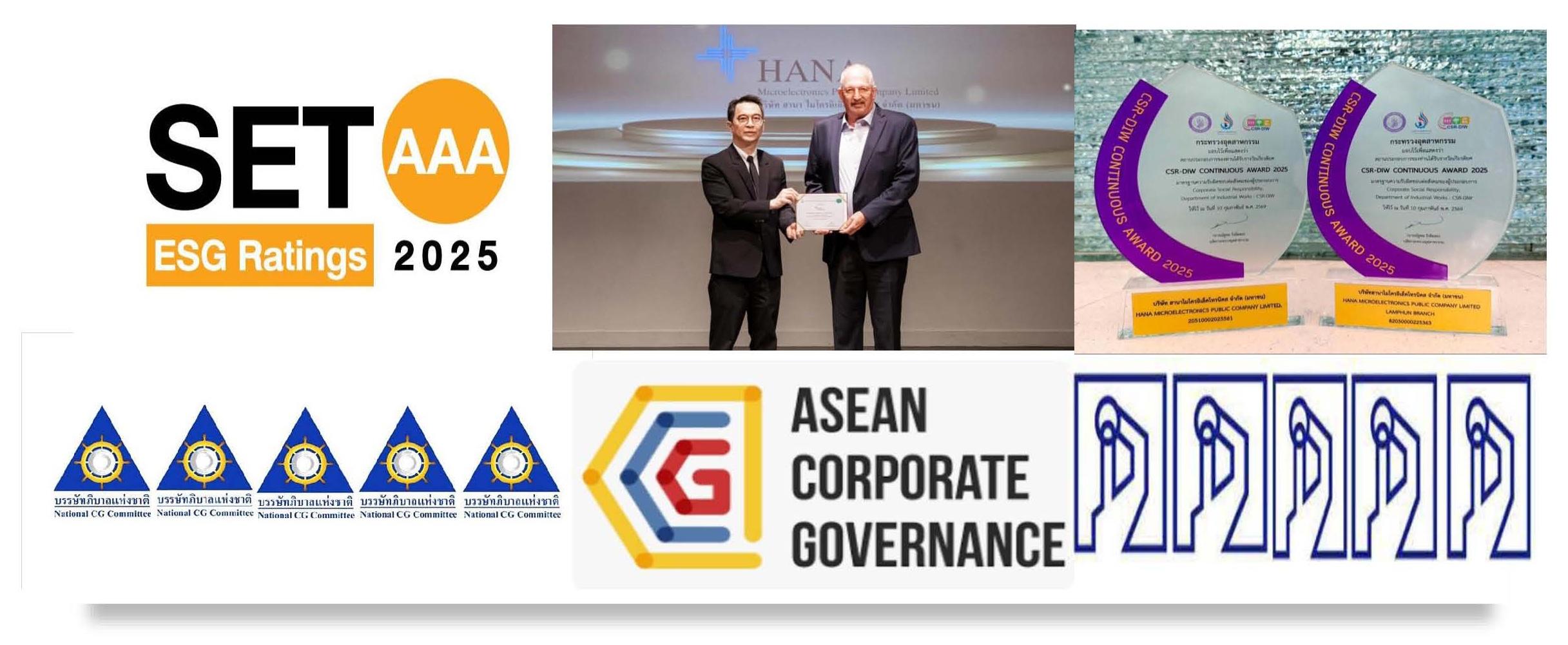
Law Violation Incidents
Law Violation Incidents
| Metric | Current Year | Previous Year | Two Years Ago |
|---|---|---|---|
| The total number of cases or incidents of significant violations of laws or regulations regarding social and human rights (Cases) | 0 | 0 | 0 |
| The total number of cases or incidents that cause significant labor disputes (Cases) | 0 | 0 | 0 |
| The total number of cases or complaints related to consumer rights violations (Cases) | 0 | 0 | 0 |
| The total number of cases or complaints related to partner rights violations (Cases) | 0 | 0 | 0 |
| The total number of cases or incidents that cause disputes with the community/society (Cases) | 0 | 0 | 0 |
| The total number of cases or incidents related to cyber security or customer data breaches (Cases) | 0 | 0 | 0 |
| The total number of cases or incidents related to safety and occupational health at work (Cases) | 0 | 0 | 0 |